Menu

Business Interruption Mitigation in Orlando – Immediate Response to Keep Your Operations Running During Water Damage Events

Reliance Water Damage Restoration Orlando deploys industrial-grade extraction, structural drying, and emergency facility stabilization to minimize commercial downtime and restore business continuity across metro Orlando commercial properties.

Slider Image 1
Slider Image 2
Slider Image 3
Slider Image 4
Slider Image 5
Slider Image 7
Slider Image 8
Slider Image 9
Slider Image 10
Slider Image 11

Why Water Damage Creates Operational Crises for Orlando Businesses

When a pipe bursts in a Downtown Orlando office complex or a roof leak floods a Millenia warehouse during afternoon thunderstorms, the financial clock starts immediately. Every hour of halted operations translates to lost revenue, disrupted supply chains, and potential contract breaches.

Orlando's subtropical climate compounds commercial water damage risks. Summer humidity averages 75 percent, creating rapid secondary damage when water intrusion goes unaddressed. Mold colonization begins within 24 to 48 hours on organic materials like drywall and ceiling tiles. The city's flat topography and high water table mean standing water persists longer in ground-level spaces, saturating concrete slabs and damaging electrical infrastructure.

Central Florida's commercial districts face unique vulnerabilities. Older buildings along Orange Avenue lack modern moisture barriers. International Drive hospitality properties operate under strict health department timelines for remediation. Industrial facilities near Orlando International Airport cannot afford extended shutdowns that affect freight logistics.

Business interruption mitigation requires immediate extraction, structural drying, and contamination control to limit business disruption. The difference between a two-day closure and a two-week shutdown often depends on response speed and equipment capacity. Commercial water damage demands industrial air movers, desiccant dehumidifiers, and thermal imaging to locate hidden moisture in wall cavities and subfloors.

Reducing operational downtime is not about mopping floors. It requires coordinated logistics to work around active business operations, protect inventory, and maintain critical systems while mitigating commercial downtime across affected zones.

Why Water Damage Creates Operational Crises for Orlando Businesses
Our Commercial Water Damage Protocol for Orlando Facilities

Our Commercial Water Damage Protocol for Orlando Facilities

Reliance Water Damage Restoration Orlando executes a triage-based approach designed for business continuity restoration. We assess the scope, isolate affected areas, and prioritize revenue-generating zones to minimize business downtime.

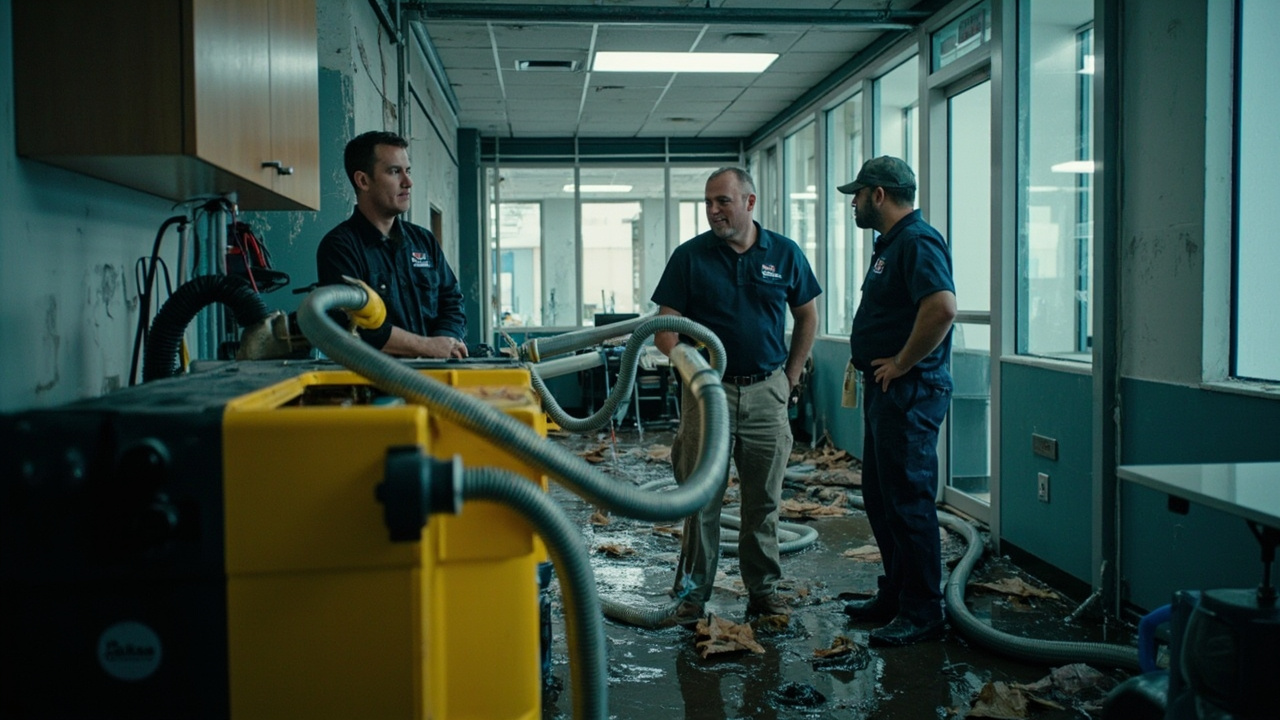
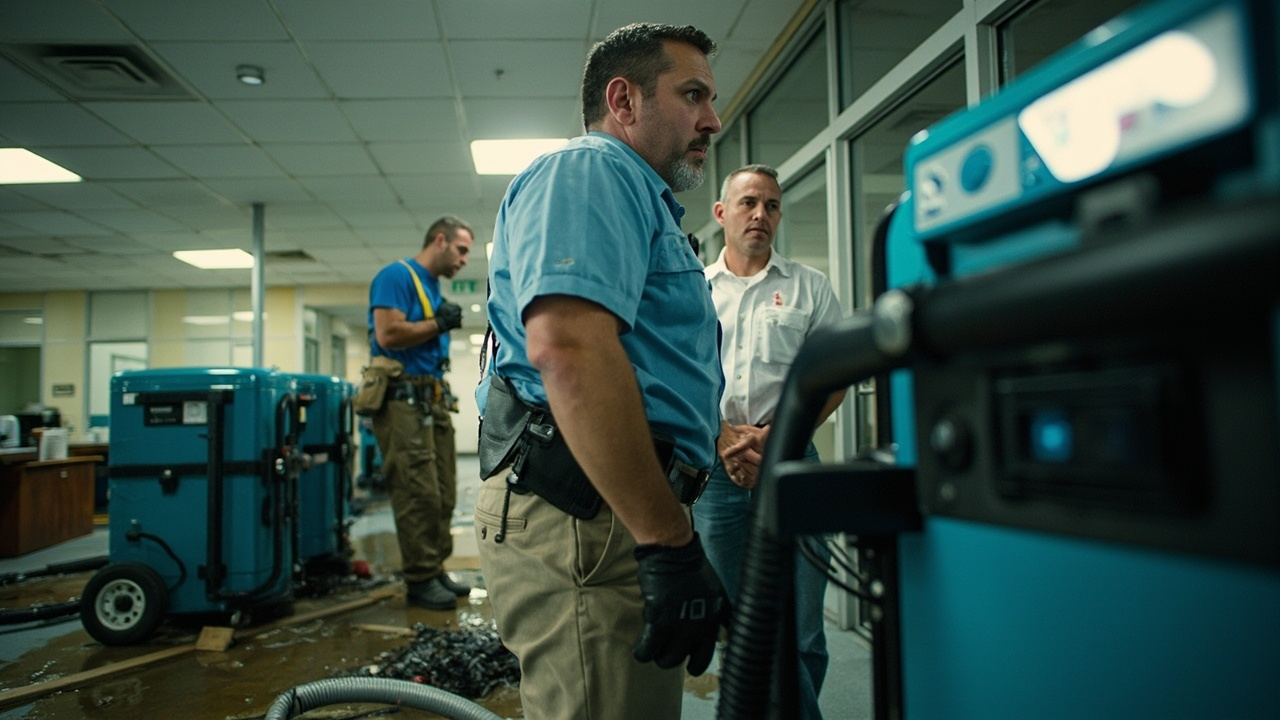
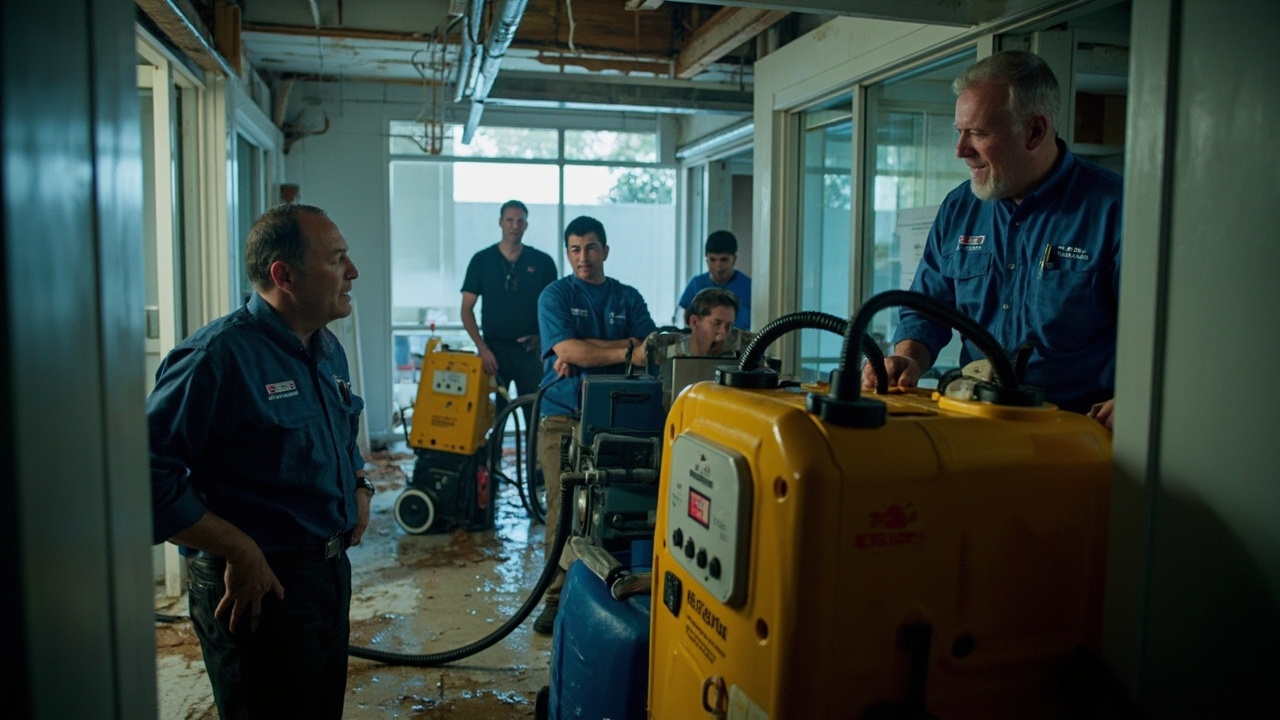
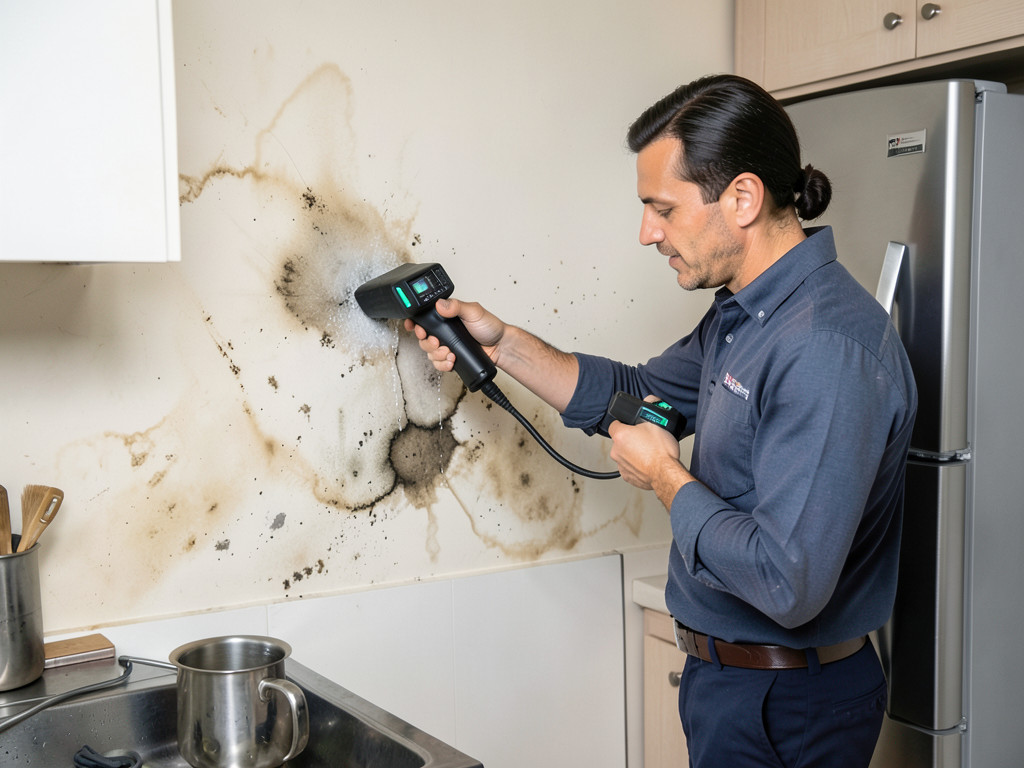
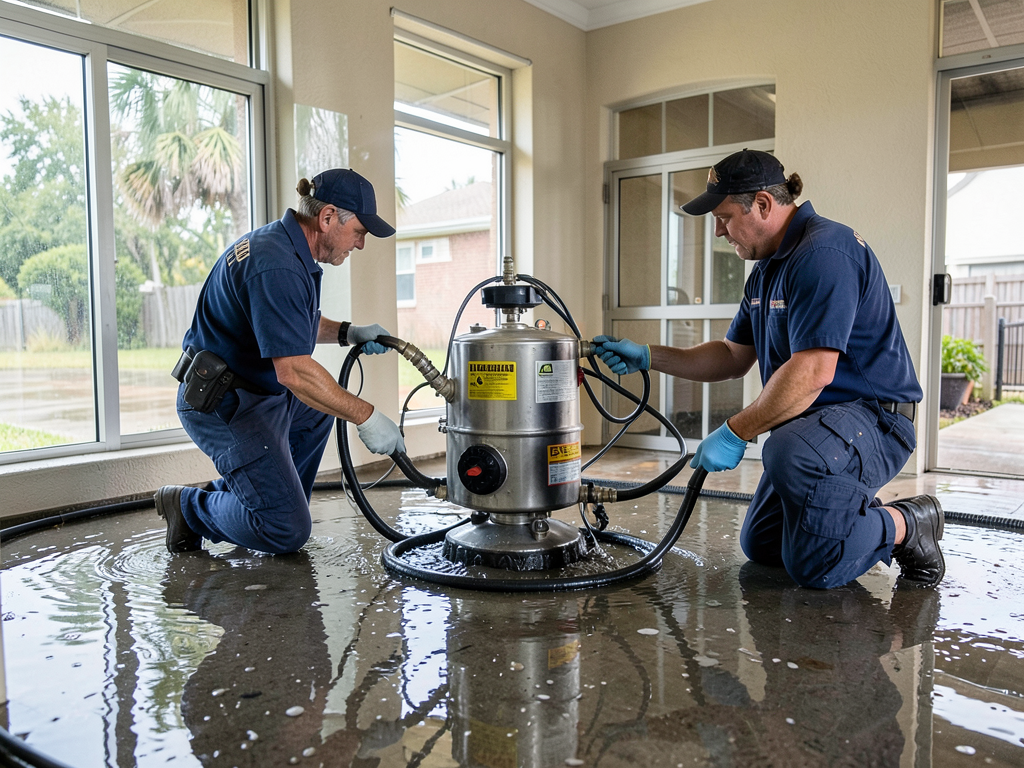
Our technicians deploy truck-mounted extraction units capable of removing thousands of gallons per hour from flooded commercial spaces. We use moisture meters and infrared cameras to map saturation levels in structural materials, creating a drying plan that targets hidden moisture pockets other contractors miss.

Structural drying in commercial facilities requires understanding HVAC interaction, building envelope dynamics, and material-specific drying times. We position low-grain refrigerant dehumidifiers to pull moisture from the air while high-velocity air movers create airflow across wet surfaces. This combination reduces drying time from weeks to days.

For Category 2 and Category 3 water intrusions involving contamination, we establish negative air pressure containment zones using HEPA-filtered air scrubbers. This prevents cross-contamination to unaffected areas and maintains air quality standards required by OSHA and Florida Department of Health protocols.

We coordinate with your insurance adjuster, document all moisture readings, and provide daily progress reports that satisfy claim requirements. Our project managers understand commercial lease obligations and work within your operational constraints to reduce business disruption.

Temperature control matters in Orlando's climate. We monitor ambient conditions and adjust drying equipment to prevent secondary humidity damage. Our goal is returning your facility to pre-loss moisture levels verified by third-party testing, ensuring you pass any required inspections before reopening affected spaces.

How We Execute Business Interruption Mitigation

Business Interruption Mitigation in Orlando – Immediate Response to Keep Your Operations Running During Water Damage Events
01

Emergency Stabilization and Assessment

We arrive on-site within two hours to stop ongoing water intrusion, extract standing water, and document pre-mitigation conditions with photographic and moisture mapping evidence. Our team identifies critical infrastructure at risk, establishes containment barriers, and creates an operational roadmap that prioritizes minimizing business downtime. You receive an immediate scope of work outlining timeline, equipment deployment, and coordination requirements to maintain partial operations during restoration.
02

Controlled Structural Drying

Industrial dehumidifiers and air movers run continuously under technician monitoring to achieve target drying goals without disrupting your workflow. We schedule equipment placement around your operating hours, protect inventory with vapor barriers, and adjust drying chambers as moisture levels drop. Daily moisture readings track progress in structural materials like concrete, wood framing, and insulation. This phase typically runs 72 hours to seven days depending on saturation depth and material composition.
03

Verification and Operational Clearance

Before equipment removal, we conduct final moisture testing to confirm all affected materials have returned to acceptable ranges per IICRC S500 standards. You receive a detailed mitigation report with before and after readings, equipment logs, and third-party clearance documentation if required by your insurer or lease agreement. We provide recommendations for preventing future water intrusion and coordinate with your contractors if reconstruction is needed. Your facility is cleared for full operations with documented proof of proper drying.

Why Orlando Commercial Properties Trust Our Response Capacity

Business continuity restoration demands more than fast response. It requires understanding commercial building systems, local code requirements, and the logistics of working in occupied facilities.

Reliance Water Damage Restoration Orlando maintains equipment inventory to handle multi-suite office complexes, retail centers, and warehouse facilities simultaneously. We do not subcontract emergency response. Our employed technicians are trained in commercial water damage protocols, contamination control, and coordination with property management teams.

Orlando's building stock presents specific challenges. Many commercial structures built before 2000 lack proper drainage systems for Central Florida's intense rainfall. The city's transition from orange groves to urban development left pockets of poor soil drainage in areas like MetroWest and Lake Nona. We understand these geographical factors and how they affect below-grade water intrusion and foundation moisture.

We work within Orange County building department requirements for commercial restoration projects. Our documentation meets the standards insurance adjusters expect for commercial claims, which differ significantly from residential mitigation. We understand the difference between declared value policies and actual cash value coverage, and how those distinctions affect your claim payout.

Our project managers coordinate with your facilities team to maintain security protocols, protect sensitive equipment, and minimize disruption to employees or customers. We schedule after-hours work when necessary and provide temporary power solutions if electrical systems require shutdown during drying operations.

You need a contractor who understands commercial lease obligations, ADA compliance during temporary closures, and liability concerns when the public accesses partially affected spaces. We provide that expertise backed by general liability coverage sufficient for large commercial projects.

What to Expect During Commercial Water Damage Mitigation

Response Time and Availability

We maintain 24/7 dispatch for commercial emergencies across metro Orlando. Our average on-site arrival time is under two hours from initial contact. Night and weekend calls receive the same priority as business-hour requests because we understand commercial downtime costs accumulate regardless of when damage occurs. Our crews arrive with truck-mounted extraction equipment and sufficient supplies to begin immediate mitigation without waiting for additional resources. You receive direct contact information for your assigned project manager who remains available throughout the mitigation process for status updates and coordination needs.

Initial Assessment Process

Our technicians conduct a comprehensive facility walk-through to identify all affected areas, including hidden moisture in wall cavities, subfloors, and ceiling plenums. We use thermal imaging to locate temperature differentials indicating wet building materials. Moisture meters provide quantitative readings that establish baseline conditions and guide drying goals. You receive a written scope of work detailing affected square footage, contamination category, estimated drying time, and equipment requirements. This assessment includes coordination points with your insurance carrier and recommendations for protecting unaffected inventory or equipment during the drying process.

Drying Quality and Completion Standards

We dry structures to IICRC S500 standards, which specify acceptable moisture content levels for different building materials. Concrete slabs must reach below 75 percent relative humidity before flooring replacement. Wood framing requires moisture content below 15 percent. Drywall and insulation must return to pre-loss equilibrium with ambient conditions. Our technicians document daily progress with dated moisture readings and photographic evidence. Final clearance includes written certification that all materials meet drying standards, protecting you from future mold claims or structural issues caused by incomplete drying. This documentation satisfies insurance requirements and lease obligations for commercial properties.

Post-Mitigation Support and Monitoring

After equipment removal, we provide a comprehensive mitigation report with all moisture readings, equipment logs, and photographic documentation for your records. If reconstruction is needed, we coordinate with your chosen contractors and provide them with our findings to guide repair work. We offer follow-up moisture testing if you experience concerns about lingering dampness or odors. Our team remains available to answer insurance adjuster questions or provide additional documentation required for claim settlement. For facilities with recurring water intrusion issues, we provide recommendations for drainage improvements, plumbing upgrades, or moisture monitoring systems to prevent future damage.

Frequently Asked Questions

You Have Questions,
We Have Answers

What is a mitigation strategy in business? +

A mitigation strategy in business is a proactive plan to reduce the impact of risks before they occur. You identify potential threats, assess their likelihood and severity, then implement controls to minimize damage. In Orlando, this includes preparing for hurricanes, tropical storms, and seasonal flooding that can disrupt operations. Common mitigation actions include maintaining emergency power systems, securing water intrusion points, establishing data backups, and creating business continuity plans. The goal is to reduce downtime, protect assets, and maintain cash flow when disruptions happen. Effective mitigation lowers insurance costs and ensures faster recovery after incidents.

What does business interruption coverage cover? +

Business interruption coverage reimburses lost income when your Orlando facility cannot operate due to a covered peril like fire, wind damage, or water intrusion. It covers net profit you would have earned, continuing fixed expenses like rent and payroll, temporary relocation costs, and extra expenses to minimize downtime. Coverage triggers when physical damage forces a shutdown. It does not cover losses from pandemics, cyberattacks, or utility failures unless specifically endorsed. You must prove actual income loss with financial records. The policy typically includes a waiting period before payments begin and caps coverage at a specified duration.

What actions can be taken to reduce or mitigate business risks? +

You reduce business risks through diversification, redundancy, and physical hardening. Diversify suppliers and revenue streams to avoid single points of failure. Install backup power systems, redundant HVAC units, and emergency water shutoff valves. Harden your Orlando facility against hurricanes with impact-resistant windows and reinforced roofing. Create detailed emergency response protocols and train staff regularly. Conduct vulnerability assessments focusing on flooding risks, especially in low-lying areas near lakes or waterways. Establish relationships with emergency restoration contractors before disasters strike. Maintain adequate insurance coverage and review policies annually. Document all assets and create offsite data backups to ensure rapid recovery.

Is business interruption insurance worth it? +

Business interruption insurance is worth it if your Orlando operation depends on physical premises to generate revenue. Calculate your daily operating expenses and net profit, then multiply by your estimated recovery time after a major hurricane or flood. If that number threatens your survival, you need coverage. The policy costs typically range from 1-3% of your coverage limit. Businesses in flood-prone areas or those with high fixed costs benefit most. Without it, you pay all expenses during shutdowns while earning nothing. The coverage protects cash flow and prevents permanent closure after catastrophic events common in Central Florida.

What are the 4 mitigation strategies? +

The four primary mitigation strategies are avoidance, reduction, transfer, and acceptance. Avoidance means eliminating the risk entirely by changing operations or location. Reduction involves implementing controls to lower probability or impact, like installing flood barriers at your Orlando facility. Transfer shifts financial risk to insurers or contractors through policies and indemnification clauses. Acceptance means acknowledging minor risks and absorbing potential losses when mitigation costs exceed the risk value. Most businesses use a combination approach. High-impact risks like hurricane damage require reduction and transfer strategies, while low-probability events may be accepted based on cost-benefit analysis.

What are 5 examples of mitigation? +

Five mitigation examples include installing commercial-grade sump pumps with battery backup, elevating critical equipment above flood levels, applying waterproof sealants to foundation walls and windows, creating redundant data systems with cloud backups, and maintaining emergency generator capacity for essential operations. In Orlando, you should also secure roof attachments to withstand hurricane winds, install backflow preventers to stop sewage intrusion during floods, establish relationships with emergency restoration contractors, maintain storm shutters or impact-resistant glazing, and create detailed business continuity plans with alternative workspace arrangements. Each measure reduces specific vulnerabilities in your operation.

What is an example of a business interruption? +

A business interruption occurs when water damage from a burst pipe forces your Orlando retail store to close for three weeks during peak season. You continue paying rent, utilities, and salaried employees while generating zero revenue. Another example is a restaurant shut down after hurricane winds damage the roof, allowing water intrusion that ruins equipment and inventory. A third scenario involves a hotel losing bookings when flooding damages guest rooms and common areas. Each situation creates measurable income loss and ongoing expenses. The interruption ends when you restore operations to pre-loss condition, not just when repairs finish.

What is the 80% rule in insurance? +

The 80% rule requires you to insure your property for at least 80% of its replacement value to avoid coinsurance penalties. If your Orlando building is worth 1 million dollars, you need at least 800,000 dollars in coverage. Insuring less triggers a penalty that reduces claim payments proportionally. If you carry only 600,000 dollars in coverage and file a 100,000 dollar claim, the insurer pays only 75,000 dollars because you met just 75% of the 80% requirement. This rule protects insurers from businesses underinsuring to save premiums while expecting full compensation for partial losses.

What is not covered under a BOP policy? +

A Business Owners Policy excludes flood damage, earthquakes, employee injuries covered by workers compensation, professional liability, cyber incidents, and intentional acts. It does not cover business interruption without direct physical loss, mechanical breakdown unless endorsed, pollutant cleanup, or government seizure. In Orlando, flood insurance requires a separate NFIP or private policy. Auto liability needs commercial vehicle coverage. BOPs typically exclude mold beyond limited amounts, landscaping over set limits, and money beyond specified amounts. Employment practices violations, patent infringement, and contract disputes require separate professional or commercial liability policies. Review exclusions carefully for gaps.

What are the five main mitigation strategies? +

The five main mitigation strategies are avoidance, reduction, sharing, transfer, and acceptance. Avoidance eliminates exposure by not engaging in risky activities. Reduction implements controls to minimize impact, like installing water detection systems. Sharing distributes risk across multiple parties through partnerships or joint ventures. Transfer moves financial burden to insurers through policies or to contractors through hold-harmless agreements. Acceptance acknowledges risks too small to justify mitigation costs. Orlando businesses often combine strategies, transferring catastrophic hurricane risk through insurance while reducing water damage risk with physical improvements and accepting minor operational disruptions as normal business costs.

Why Orlando's Climate Demands Aggressive Commercial Water Damage Response

Central Florida receives 53 inches of annual rainfall, concentrated in intense afternoon thunderstorms between June and September. This precipitation pattern creates roof drainage failures and overwhelmed stormwater systems in commercial districts. Orlando's 220 feet average elevation and shallow water table mean ground-level facilities face hydrostatic pressure that forces water through concrete slab joints and foundation penetrations. The combination of high humidity and warm temperatures accelerates microbial growth on wet building materials. Commercial properties cannot afford the extended drying times acceptable in arid climates. Aggressive dehumidification and air movement are essential for business continuity restoration in Orlando's subtropical environment.

Orlando's commercial real estate market includes mixed-use developments, hospitality properties, medical facilities, and distribution centers serving the I-4 corridor. Each property type has specific operational requirements during water damage mitigation. Hotels cannot close room blocks during peak tourism seasons. Medical offices must maintain patient access and HIPAA compliance. Warehouses face inventory loss if climate control fails during restoration. Reliance Water Damage Restoration Orlando understands these constraints because we work exclusively in Central Florida commercial markets. Our equipment capacity and local expertise allow us to execute complex mitigation projects while your business continues operating in unaffected areas.
Water Damage Restoration Services in The Orlanado Area

Looking for fast and reliable water damage restoration in your area? Reliance Water Damage Restoration Orlando proudly serves homes and businesses throughout Orlando and surrounding communities. Whether you're dealing with flood damage, burst pipes, or mold issues, our expert team is ready to respond 24/7. We use industry-leading equipment to extract water, dry structures, and restore your property to pre-loss condition. Check the map below to see if we service your neighborhood, or call now for immediate help.

Address:
Reliance Water Damage Restoration Orlando, 7380 W Sand Lake Rd Suite 500, Orlando, FL, 32819

Additional Services We Offer

Our news updates

Latest Articles & News from The Blogs

Lorem ipsum dolor sit amet. Aut expedita quaerat quo eligendi numquam et laudantium perspiciatis qui minima expedita rem consequatur ducimus.…

Test Blog 4

Lorem ipsum dolor sit amet. Aut expedita quaerat quo eligendi numquam et laudantium perspiciatis qui minima expedita rem consequatur ducimus.…

Test Blog 3

Lorem ipsum dolor sit amet. Aut expedita quaerat quo eligendi numquam et laudantium perspiciatis qui minima expedita rem consequatur ducimus.…

Test Blog 2

Lorem ipsum dolor sit amet. Aut expedita quaerat quo eligendi numquam et laudantium perspiciatis qui minima expedita rem consequatur ducimus.…

Contact Us

Every hour of delayed response extends your closure timeline and increases restoration costs. Contact Reliance Water Damage Restoration Orlando now at (689) 268-2233 for immediate commercial water damage mitigation. Our crews are ready to deploy across metro Orlando.