Menu

Hidden Moisture Detection in Orlando – Stop Water Damage Before It Spreads Through Your Walls

Advanced thermal imaging and moisture mapping pinpoint trapped water in walls, ceilings, and floors before mold takes hold. Reliance Water Damage Restoration Orlando uses infrared technology and hygrometers to find concealed dampness others miss.

Slider Image 1
Slider Image 2
Slider Image 3
Slider Image 4
Slider Image 5
Slider Image 7
Slider Image 8
Slider Image 9
Slider Image 10
Slider Image 11

Why Hidden Moisture is a Serious Problem in Orlando Homes

You notice a musty smell in your guest bedroom. The drywall feels fine. No visible stains. But something is wrong.

Orlando's high humidity and frequent afternoon thunderstorms create perfect conditions for hidden water intrusion. Water migrates behind baseboards, seeps into wall cavities through tiny roof penetrations, and pools under tile floors without leaving obvious surface clues. By the time you see discoloration or bubbling paint, microbial growth has already started.

Detecting invisible leaks requires more than a visual inspection. Water travels along framing members, electrical conduits, and HVAC ducts. A small plumbing leak inside a bathroom wall can saturate insulation two rooms away. Roof flashing failures near valleys or chimneys allow rainwater to drip onto attic insulation, where it spreads laterally before soaking through ceilings.

Finding trapped water early prevents structural rot. Wood framing in Florida homes is vulnerable to decay when moisture content exceeds 20 percent. Drywall loses integrity. Metal fasteners corrode. Subfloors delaminate.

The challenge with locating concealed dampness is that water hides in interstitial spaces. It saturates porous materials like drywall paper backing and carpet padding, creating humid pockets that never fully dry between rain events. Orlando's average relative humidity hovers around 75 percent year-round, which means materials stay damp longer.

Identifying unseen water intrusion before visible damage appears saves you thousands in reconstruction costs. Spotting hidden water damage requires specialized equipment and an understanding of how water behaves in Central Florida's unique climate and construction styles.

Why Hidden Moisture is a Serious Problem in Orlando Homes
How We Pinpoint Moisture You Cannot See

How We Pinpoint Moisture You Cannot See

Reliance Water Damage Restoration Orlando uses a multi-tool approach to map moisture distribution. We do not guess. We measure.

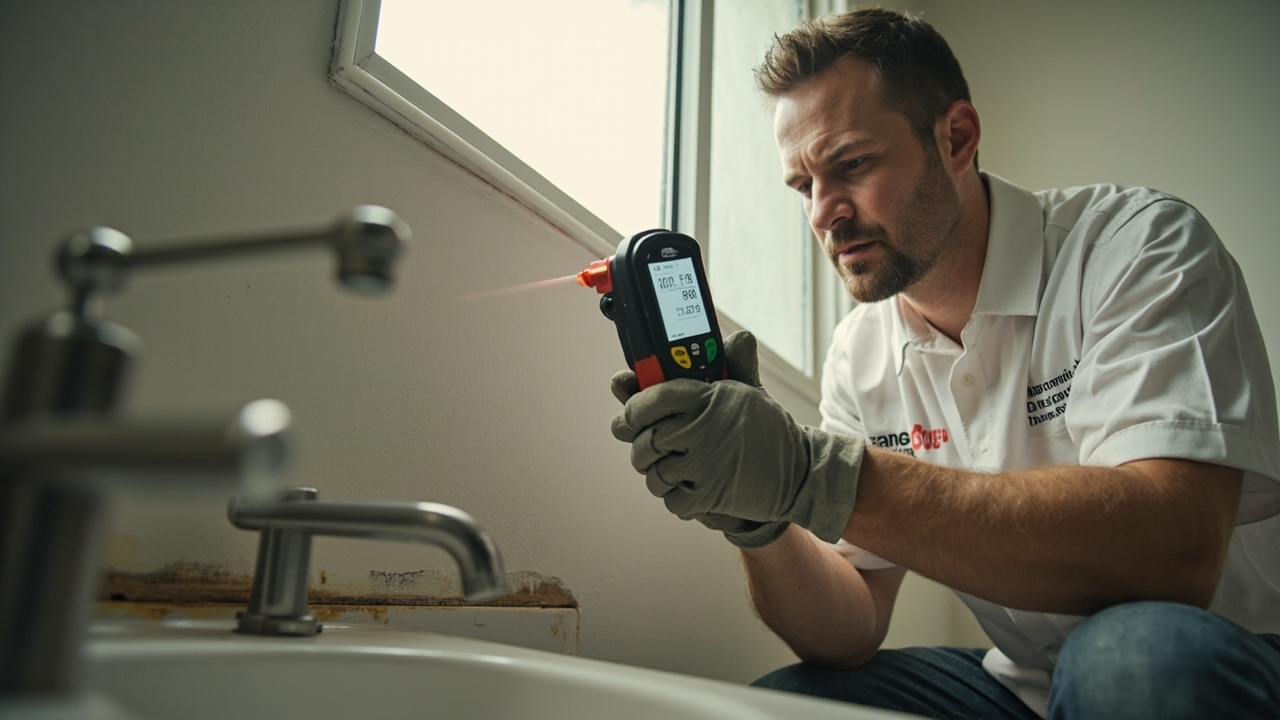
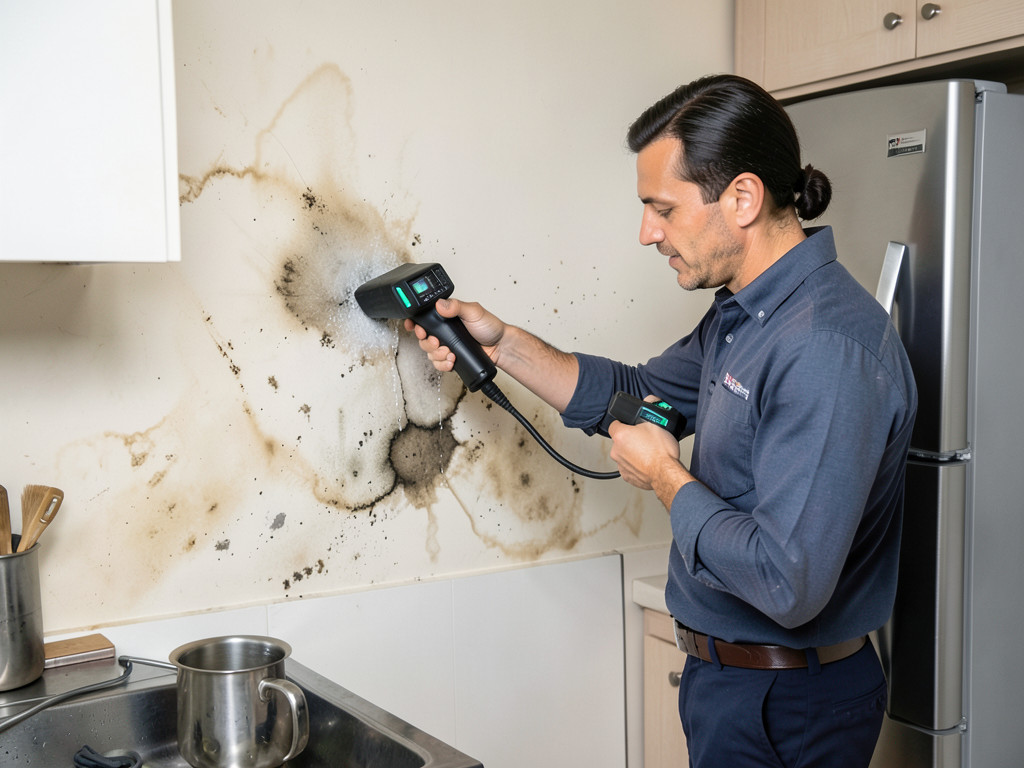
Infrared thermal imaging cameras detect temperature differentials. Wet materials hold heat differently than dry materials. When we scan your walls and ceilings, cooler spots indicate moisture presence. This non-invasive method reveals water patterns behind finished surfaces without cutting into drywall.

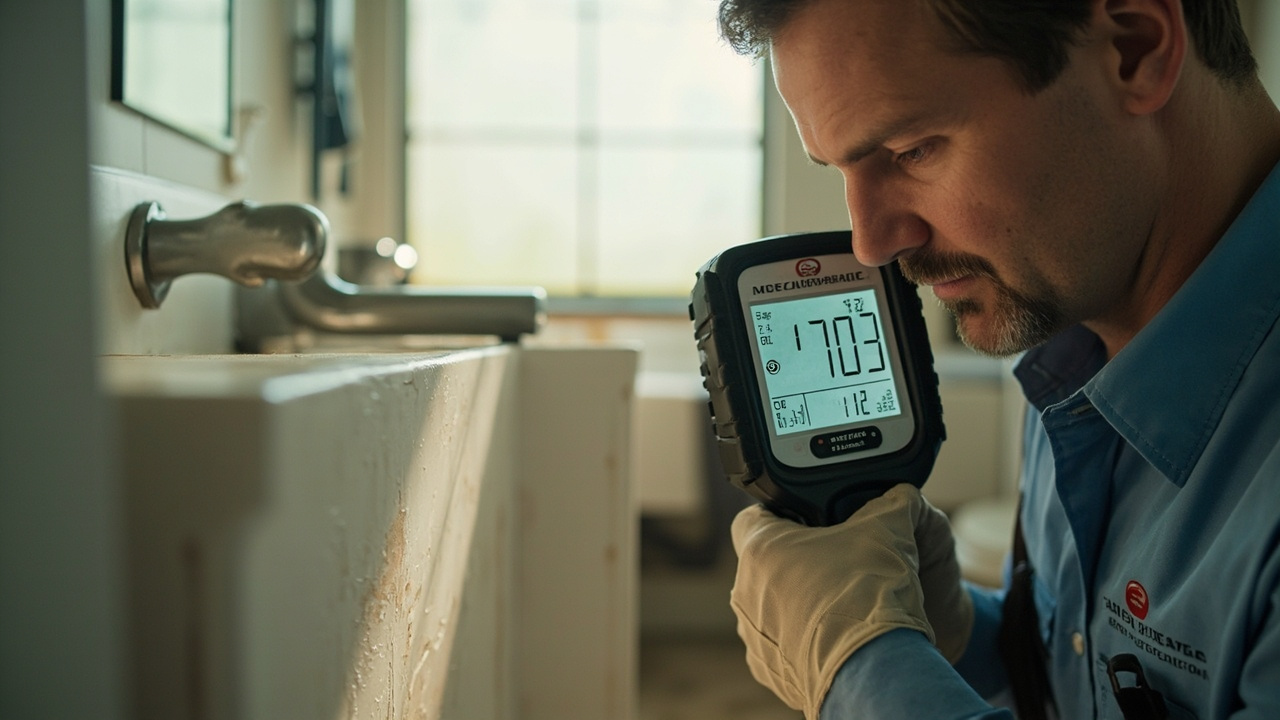
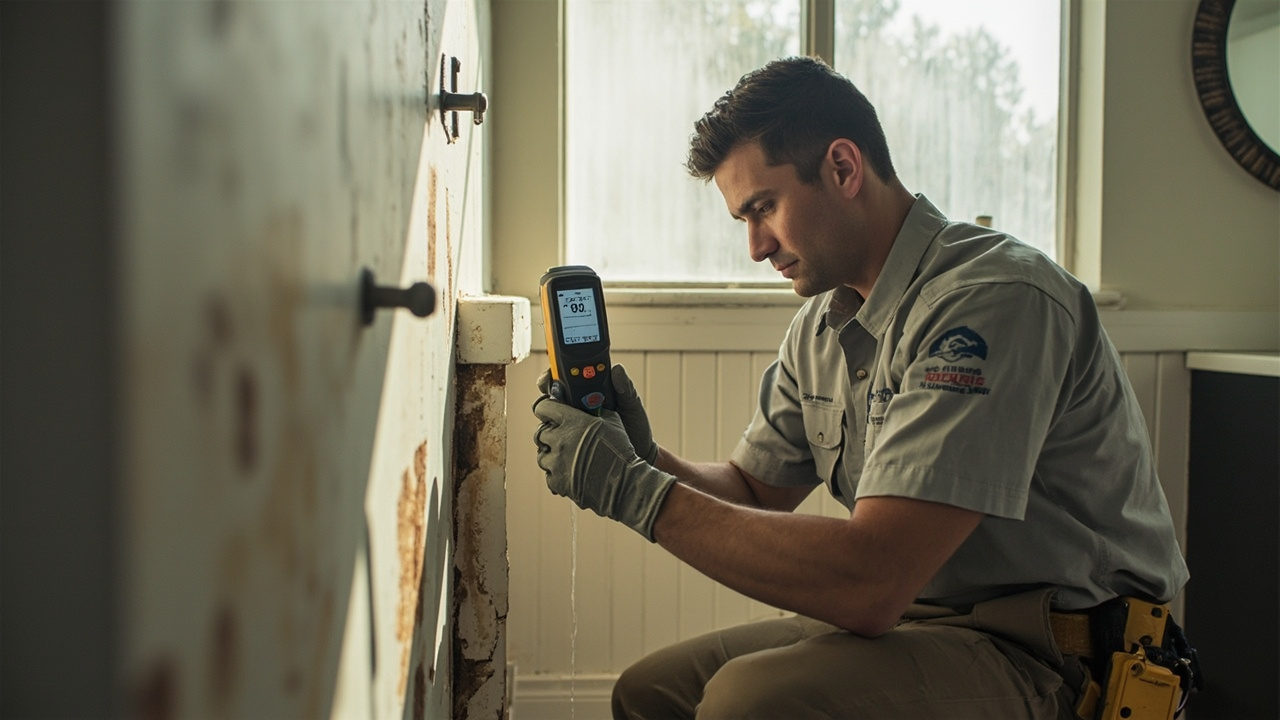
We follow thermal imaging with pin-type and pinless moisture meters. Pin meters penetrate material surfaces to measure electrical resistance, which increases with moisture content. We probe baseboards, subfloors, and wall studs to quantify saturation levels. Pinless meters use electromagnetic waves to scan larger surface areas quickly, perfect for checking drywall and plaster without leaving holes.

Hygrometers measure ambient humidity and material moisture equilibrium. In enclosed spaces like crawl spaces or wall cavities, high relative humidity indicates ongoing evaporation from wet materials. We use psychrometers to calculate vapor pressure and dew point, which tells us if conditions support drying or if moisture will continue accumulating.

Borescopes allow visual inspection inside wall cavities through small access holes. We insert a flexible camera probe to verify findings from thermal scans and moisture readings. This confirms the extent of water damage and identifies the source, whether it is a leaking drain line, roof penetration, or failed window seal.

We document findings with digital mapping. Every moisture reading gets logged with GPS coordinates and photos. This creates a forensic record for insurance claims and guides our drying strategy. We know exactly where to place air movers and dehumidifiers for maximum efficiency.

What Happens During a Moisture Detection Service

Hidden Moisture Detection in Orlando – Stop Water Damage Before It Spreads Through Your Walls
01

Initial Assessment and Scanning

We start with a visual inspection to identify obvious clues like staining, efflorescence, or material deformation. Then we use thermal imaging to scan walls, ceilings, and floors in affected areas and adjacent rooms. Infrared cameras reveal temperature anomalies that indicate moisture presence. We mark suspect areas and prepare for detailed testing using calibrated moisture meters.
02

Moisture Quantification and Mapping

We measure moisture content at multiple points using pin and pinless meters. Each reading gets recorded on a moisture map showing saturation levels throughout the structure. We test materials at different depths and locations to determine how far water has migrated. Hygrometers measure air humidity in wall cavities and enclosed spaces, revealing conditions that support continued moisture accumulation.
03

Source Identification and Reporting

We trace moisture patterns back to their source using borescope inspection and pressure testing where needed. You receive a detailed report with thermal images, moisture readings, and our findings about what caused the water intrusion. We explain the scope of damage and provide a drying plan. This documentation supports insurance claims and gives you a clear path forward.

Why Orlando Property Owners Trust Our Detection Methods

Water damage does not wait. You need answers fast, and you need them right the first time.

Reliance Water Damage Restoration Orlando specializes in Florida construction methods. We understand how block walls wick moisture differently than frame walls. We know Orlando's soil conditions and how slab foundations behave during wet seasons. This local knowledge matters when interpreting moisture readings.

Many restoration companies rely on basic moisture meters and guesswork. They miss water trapped in wall cavities or assume surface drying means the problem is solved. We use FLIR thermal cameras calibrated for Florida's temperature ranges. Our technicians are trained in psychrometrics and building science, not just equipment operation.

Orlando's building codes evolved after the 2004 hurricane season. Homes built before 2005 often have different flashing details and vapor barrier installations than newer construction. We account for these differences when tracking water migration paths. A leak in a 1980s Lake Nona home behaves differently than one in a 2015 Winter Park build.

Insurance companies require documentation. Our moisture mapping provides the evidence adjusters need to approve claims. We photograph every reading, log equipment serial numbers, and follow IICRC S500 standards for water damage assessment. You get a professional report that holds up under scrutiny.

We respond to Orlando properties within two hours of your call. Hidden moisture becomes a bigger problem every day it sits undetected. Microbial growth starts within 48 hours under the right conditions. We stop that clock by identifying problems fast and starting mitigation immediately.

You get straight answers. We tell you what we find, what it means, and what needs to happen next. No upselling. No vague estimates.

What You Can Expect From Our Moisture Detection Service

Fast Response and Comprehensive Scanning

We arrive within two hours for Orlando emergency calls. The inspection takes 60 to 90 minutes depending on property size and complexity. We scan all suspected areas plus adjacent spaces, because water travels. You get results the same day. Our technicians carry thermal cameras, multiple moisture meters, hygrometers, and borescopes on every truck. No return trips to get different equipment. We handle residential homes, commercial buildings, and multi-unit properties. After-hours and weekend appointments are available.

Detailed Moisture Mapping and Analysis

We create a digital moisture map showing exact saturation levels throughout affected areas. Every reading includes the material type, depth, and moisture content percentage. Thermal images show temperature differentials that reveal hidden water. We test air humidity in wall cavities and enclosed spaces to assess drying conditions. You receive a written report with photos, equipment readings, and our professional assessment of damage extent. This documentation meets insurance company requirements and helps contractors plan repairs accurately.

Accurate Source Identification

We do not just find moisture. We find where it came from. Using moisture pattern analysis, borescope inspection, and building knowledge, we trace water back to the entry point. This might be a roof penetration, failed plumbing fitting, HVAC condensate issue, or exterior grading problem. We distinguish between active leaks and old water damage. You get clear answers about what caused the problem and what repairs are needed to prevent recurrence. No guessing.

Drying Plan and Follow-Up Verification

After identifying moisture locations, we develop a targeted drying strategy. We place air movers and dehumidifiers based on psychrometric calculations, not guesswork. Daily moisture readings track drying progress until materials return to normal levels. We document when each area reaches dry standard, which typically takes three to five days for wall cavities depending on saturation extent. You receive a completion certificate showing final moisture readings. This proves materials are dry and protects you from future mold claims.

Frequently Asked Questions

You Have Questions,
We Have Answers

Why does my phone say moisture detected when there is no moisture? +

Your phone triggers moisture warnings when corrosion, lint, or residue builds up inside the charging port. False alarms happen frequently in Orlando due to high humidity and sweat exposure. Clean the port gently with a dry toothbrush or compressed air. Let the phone air dry for 30 minutes. If the warning persists after cleaning, the sensor may be faulty and require professional repair. Avoid using wet cloths or inserting objects that damage the port. This is a device issue, not a sign of water damage in your home.

How do you detect moisture behind walls? +

Professionals use moisture meters to detect water behind walls without demolition. Pin-type meters penetrate drywall to measure moisture content. Pinless meters scan surfaces using electromagnetic signals. Thermal imaging cameras reveal temperature differences caused by wet insulation or framing. In Orlando homes, hidden moisture often accumulates behind bathroom tiles, exterior walls facing afternoon rains, or near AC condensate lines. Visible signs include paint bubbling, wallpaper peeling, or musty odors. Catching hidden moisture early prevents mold growth and structural rot common in Florida's humid climate.

Do moisture Readers really work? +

Yes, moisture meters provide accurate readings when used correctly. Pin-type meters measure electrical resistance between two prods inserted into materials. Pinless meters detect moisture depth using radio frequencies. Professional-grade meters account for material density and temperature. Cheap consumer models often give false readings. In Orlando, moisture meters help identify water intrusion after storms, AC leaks, or plumbing failures. They measure moisture percentage in wood, drywall, and concrete. Readings above 15 percent in wood indicate active water damage requiring immediate attention. Meters do not detect mold directly, only the moisture that causes it.

What do home inspectors use to detect moisture? +

Home inspectors use handheld moisture meters and thermal imaging cameras during property assessments. Pin meters test specific spots like window frames and baseboards. Infrared cameras scan entire walls for cold spots indicating moisture. Inspectors check common problem areas in Orlando homes including attic insulation after roof leaks, crawl spaces with poor ventilation, and walls near HVAC units. They document moisture levels in inspection reports to flag potential water damage or mold risk. These tools help buyers avoid purchasing homes with hidden water problems that cost thousands to repair.

How do I fix a moisture detected glitch? +

Restart your device first. If the moisture warning persists, power off the phone and remove any case. Use compressed air to blow out the charging port. Let it air dry in a cool, low-humidity room for one hour. Do not use rice, which leaves debris. In Orlando's humid climate, keep phones away from bathroom steam and outdoor moisture. If the glitch continues after drying, clear the USB settings cache in your phone's system settings. Persistent false warnings indicate sensor corrosion requiring professional phone repair, not a moisture problem in your home.

How to get rid of Samsung moisture Warning? +

Power off your Samsung device immediately. Remove the charging cable and any case. Inspect the USB port for visible debris, lint, or corrosion. Use compressed air or a dry toothbrush to clean gently. Place the phone in a dry area with good airflow for 30 to 60 minutes. Orlando's humidity can trigger false warnings even without direct water contact. Avoid placing phones near AC vents where condensation forms. If the warning remains after thorough drying and cleaning, the moisture sensor may be damaged and require factory repair or replacement.

How to tell if water is leaking behind a wall? +

Look for paint discoloration, bubbling, or peeling on walls. Water stains appear as yellow or brown rings. Wallpaper lifts at seams when wet. Baseboards warp or separate from walls. You may smell musty odors indicating mold growth. Touch walls to feel for dampness or temperature differences. In Orlando homes, leaks often occur near bathroom plumbing, exterior walls during heavy rains, or below windows with failed caulking. Running water sounds behind walls signal active leaks. Moisture meters and thermal cameras provide definitive proof without cutting into drywall.

Can mold grow in 50% humidity? +

Mold can grow at 50 percent humidity if other conditions exist. Mold needs moisture, organic material, and temperatures between 60 and 80 degrees. In Orlando, 50 percent humidity seems low, but localized moisture from leaks or condensation creates microenvironments where mold thrives. Porous materials like drywall, wood, and insulation absorb moisture even at moderate humidity levels. Mold grows on dust, dirt, and organic residue. Keep indoor humidity below 50 percent and fix leaks immediately. Proper ventilation and AC use prevent mold in Florida homes despite outdoor humidity regularly exceeding 70 percent.

How to find where moisture is coming from? +

Start by checking obvious sources like leaking pipes, roof damage, or failed window seals. In Orlando, AC condensate line clogs cause frequent moisture problems. Inspect walls and ceilings near bathrooms and kitchens. Use a moisture meter to scan areas with visible stains or musty smells. Thermal imaging cameras reveal hidden leaks behind walls or in attics. Check exterior drainage to ensure water slopes away from your foundation. After heavy rains, inspect walls facing prevailing winds. High indoor humidity without visible leaks suggests poor ventilation or AC issues requiring HVAC evaluation.

Will mold go away if moisture is removed? +

Removing moisture stops active mold growth, but existing mold colonies remain dormant and alive. Mold spores survive indefinitely without water. When moisture returns, dormant mold reactivates rapidly. You must remove contaminated materials and clean affected surfaces with antimicrobial solutions. In Orlando's humid climate, controlling moisture requires fixing leaks, improving ventilation, and maintaining AC systems. Porous materials like drywall and insulation absorb mold deeply and require replacement. Non-porous surfaces can be cleaned. Simply drying the area without remediation leaves mold that spreads when humidity rises again during Florida's rainy season.

How Orlando's Year-Round Humidity Complicates Moisture Detection

Orlando averages 75 percent relative humidity year-round, with summer months regularly exceeding 80 percent. This creates a narrow drying window for water-damaged materials. When ambient humidity stays high, wet drywall and insulation cannot release moisture effectively. Materials that would dry naturally in drier climates stay damp for weeks in Central Florida. This extended moisture exposure accelerates microbial growth and structural degradation. Detecting invisible leaks requires understanding equilibrium moisture content, the point where materials stop absorbing or releasing water based on surrounding air conditions. In Orlando's humid environment, normal building materials maintain higher moisture content than in drier regions, which makes distinguishing between normal and problematic moisture levels more challenging.

Florida's unique construction methods require specialized detection approaches. Many Orlando homes use concrete block exterior walls with wood frame interior partitions. Water behaves differently in these hybrid assemblies. Block walls wick moisture vertically through capillary action, while frame walls allow horizontal water migration along studs and plates. Homes in older neighborhoods like College Park or Colonialtown often have plaster over block construction, where moisture becomes trapped between layers. Understanding these local building styles helps us interpret moisture meter readings accurately and identify hidden water intrusion patterns that technicians from other regions might miss. We work with Orlando contractors, building inspectors, and insurance adjusters who know our methods produce reliable results.
Water Damage Restoration Services in The Orlanado Area

Looking for fast and reliable water damage restoration in your area? Reliance Water Damage Restoration Orlando proudly serves homes and businesses throughout Orlando and surrounding communities. Whether you're dealing with flood damage, burst pipes, or mold issues, our expert team is ready to respond 24/7. We use industry-leading equipment to extract water, dry structures, and restore your property to pre-loss condition. Check the map below to see if we service your neighborhood, or call now for immediate help.

Address:
Reliance Water Damage Restoration Orlando, 7380 W Sand Lake Rd Suite 500, Orlando, FL, 32819

Additional Services We Offer

Our news updates

Latest Articles & News from The Blogs

Lorem ipsum dolor sit amet. Aut expedita quaerat quo eligendi numquam et laudantium perspiciatis qui minima expedita rem consequatur ducimus.…

Test Blog 4

Lorem ipsum dolor sit amet. Aut expedita quaerat quo eligendi numquam et laudantium perspiciatis qui minima expedita rem consequatur ducimus.…

Test Blog 3

Lorem ipsum dolor sit amet. Aut expedita quaerat quo eligendi numquam et laudantium perspiciatis qui minima expedita rem consequatur ducimus.…

Test Blog 2

Lorem ipsum dolor sit amet. Aut expedita quaerat quo eligendi numquam et laudantium perspiciatis qui minima expedita rem consequatur ducimus.…

Contact Us

Moisture spreads every hour you wait. Get professional detection now. Call Reliance Water Damage Restoration Orlando at (689) 268-2233. We respond within two hours with thermal imaging and moisture mapping equipment. You get answers today, not next week.