Keeping Your Pets Safe During a Massive Water Damage Cleanup Project
When water floods your Orlando home the chaos affects every family member including your pets. While you worry about structural damage and insurance claims your dog or cat faces unique dangers from contaminated water industrial equipment and restoration chemicals. This guide shows you exactly how to protect your pets during the entire restoration process. Emergency Water Damage Restoration for Windermere Homeowners.
Why Water Damage Creates Special Hazards for Pets
Pets experience water damage differently than humans. Their smaller size more sensitive respiratory systems and natural curiosity put them at higher risk for specific dangers. Water Bug & Pest Infestations.
Hidden Biological Threats
Category 3 water from sewage backups or floodwater contains bacteria parasites and viruses that can make pets seriously ill. Even Category 2 gray water from washing machines or dishwashers harbors microorganisms that pets may ingest while grooming. The Best Way to Handle Sewage Backup Cleanup in College Park.
Black mold Stachybotrys chartarum grows rapidly in Orlando’s humid climate. This toxic mold releases spores that trigger respiratory distress in pets causing symptoms like coughing wheezing and nasal discharge. Dogs and cats cannot tell you they feel sick so you must prevent exposure.
Chemical Exposure Risks
Professional restoration crews use antimicrobial treatments biocides and industrial cleaners to sanitize affected areas. These chemicals contain active ingredients like quaternary ammonium compounds and hydrogen peroxide that can cause skin irritation eye damage or gastrointestinal problems if pets contact or ingest them. Professional Mold Removal and Remediation Services in Lake Nona.
Dehumidifiers and air movers release volatile organic compounds VOCs as they dry materials. While humans may only notice a slight odor pets with their heightened sense of smell experience stronger effects.
Physical Safety Concerns
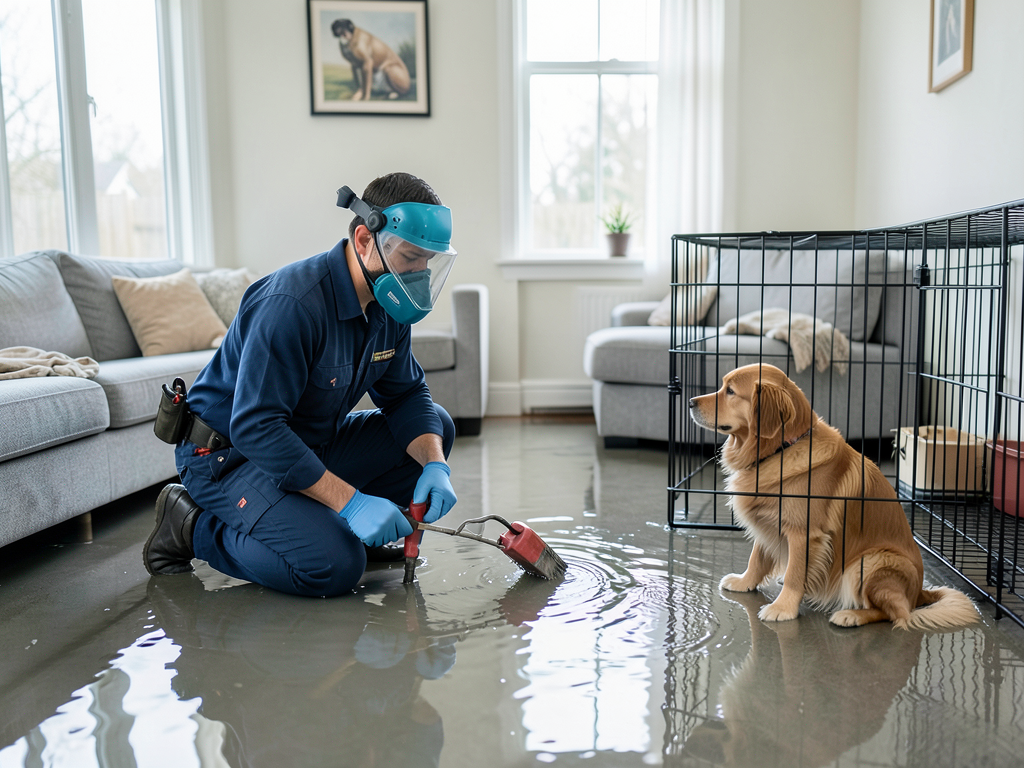
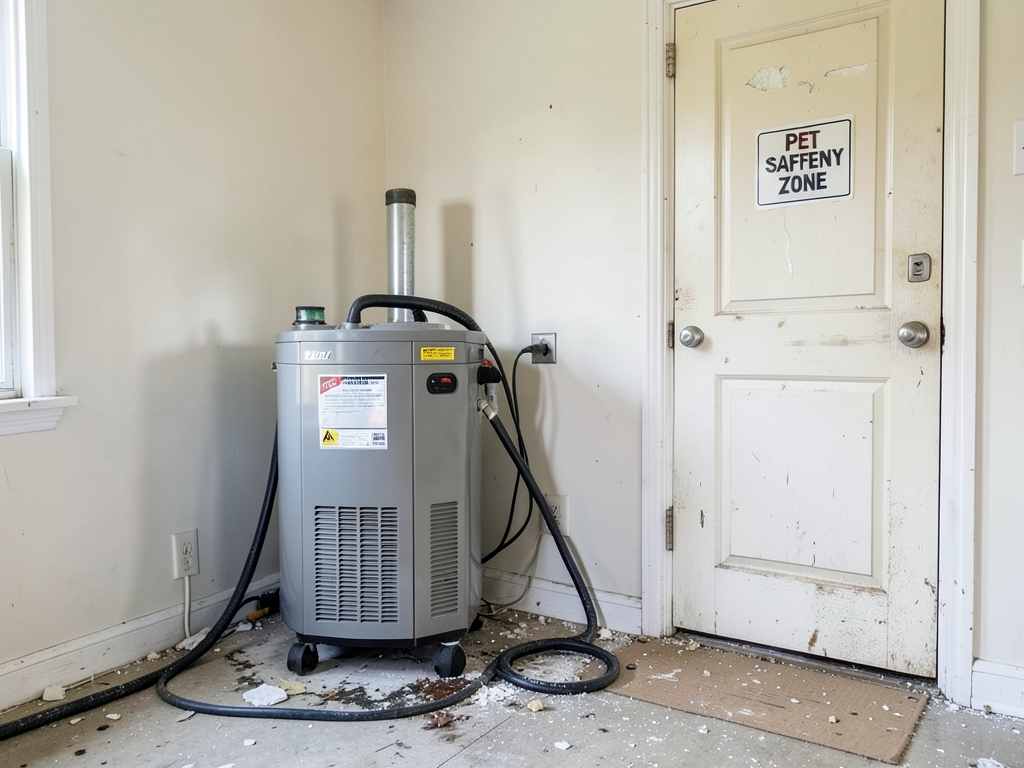
Restoration equipment creates multiple physical hazards. Industrial air movers generate winds up to 200 miles per hour that can knock over small pets or blow debris into their eyes. Heavy dehumidifiers and water extraction units have electrical cords that curious pets might chew.
Exposed subflooring nails protruding from walls and unstable building materials create injury risks. Construction zones lack the pet-proofing measures you maintain in your normal living space. Hardwood Floor Water Damage Restoration in Winter Garden.
Managing Pet Stress During Industrial Drying
The noise from restoration equipment causes significant anxiety in pets. Industrial dehumidifiers produce 70-80 decibels continuous noise similar to a vacuum cleaner but constant for days. This level of noise can damage pet hearing and trigger extreme stress responses.
Creating a Safe Zone
Designate a quiet room away from restoration work as your pet’s safe zone. Choose an interior room with no windows to block noise and prevent escape attempts. Remove all restoration equipment from this space before bringing your pet inside.
Furnish the safe zone with familiar items including your pet’s bed toys and water bowl. The scent of home items helps reduce anxiety. Consider using pheromone diffusers specifically designed for dogs or cats to create a calming atmosphere.
Orlando Boarding Options
Sometimes the safest option involves temporary relocation. Several Orlando facilities specialize in pet boarding during home emergencies.
| Boarding Facility | Features | Distance from Downtown Orlando |
|---|---|---|
| Pawsitively Pets Resort | 24/7 supervision medical care climate control | 8 miles |
| Orlando Pet Resort | Private suites webcam access grooming services | 5 miles |
| Central Florida Pet Retreat | Large outdoor play areas medication administration | 12 miles |
Call facilities immediately when you discover water damage. Emergency boarding fills quickly especially during hurricane season when multiple homes face flooding.
Florida-Specific Risks: Heat and Humidity
Orlando’s subtropical climate creates unique challenges during water damage restoration. The average humidity of 74% accelerates mold growth while high temperatures can create dangerous conditions for pets.
Maintaining Safe Temperatures
Restoration crews often turn off HVAC systems during certain phases to prevent spreading contaminants through ductwork. This leaves your home without temperature control during Orlando’s 90-degree summer days.
Pets cannot regulate body temperature as effectively as humans. Dogs cool themselves primarily through panting which becomes less effective in high humidity. Cats sweat only through their paw pads making them vulnerable to heat stress.
Monitor your pet’s temperature using a rectal thermometer if they show signs of distress. Normal dog temperature ranges from 100-102.5 degrees Fahrenheit. Anything above 103.5 indicates hyperthermia requiring immediate veterinary attention.
Mold Growth Timeline
In Orlando’s climate mold begins growing within 24-48 hours of water exposure. By day three colonies become visible and release spores into the air. This rapid growth means your pet encounters increasing mold concentrations throughout the restoration process.
| Time Since Water Exposure | Mold Development | Pet Risk Level |
|---|---|---|
| 0-24 hours | Initial germination | Low but increasing |
| 24-48 hours | Visible spots forming | Moderate |
| 48-72 hours | Active colonies releasing spores | High |
| 72+ hours | Extensive growth widespread contamination | Severe |
Checklist: Preparing Your Pet for the Restoration Crew
Before restoration begins prepare your pet and home to minimize risks. EPA Mold Information.
- Update identification tags and microchip information with current phone numbers
- Photograph your pet in case they escape during the chaos
- Pack a pet emergency kit with food medications and familiar items
- Identify two backup boarding locations in case your first choice fills up
- Discuss your pet’s specific needs with the restoration crew foreman
- Post emergency contact information for your veterinarian on the safe zone door
Emergency Contacts in Orlando
Keep these contacts readily available during restoration work.
24/7 Emergency Veterinary Clinics
Animal Emergency Center of Orlando – (407) 273-3336
4950 S Orange Ave Orlando FL 32806
East Orlando Animal Hospital Emergency – (407) 277-3495
12100 Lake Underhill Rd Orlando FL 32828
Pet-Friendly Hotels Near Orlando
La Quinta by Wyndham Orlando Airport – Pets stay free
841 S Semoran Blvd Orlando FL 32807
Residence Inn by Marriott Orlando Lake Buena Vista – Pet fee applies
8600 Vineland Ave Orlando FL 32821
Orange County Animal Services
Main shelter – (407) 254-9150
2769 Conroy Rd Orlando FL 32839
Emergency after-hours – (407) 836-3111
Understanding Restoration Phases and Pet Safety
Water damage restoration follows specific phases each requiring different pet safety protocols.
Emergency Water Extraction
During the first 24-48 hours extraction crews use powerful truck-mounted pumps and portable extractors. These machines create loud noises and strong vibrations that terrify many pets.
Keep pets completely away from extraction areas. The equipment uses hundreds of feet of hose creating trip hazards and pinch points where pets might get caught.
Structural Drying
Drying involves industrial dehumidifiers air movers and sometimes heat drying systems running continuously for 3-5 days. This phase produces the most noise and creates the highest chemical exposure risk.
Dehumidifiers pull 20-30 gallons of water from the air daily. The process releases captured contaminants creating an environment where even brief pet exposure poses health risks.
Content Manipulation
Crews move furniture belongings and building materials creating constantly changing environments. Pets become confused by the disappearing familiar items and may attempt to hide in dangerous areas.
Final Cleaning and Sanitization
The last phase involves applying antimicrobial treatments and cleaning products. These chemicals require 2-4 hours of drying time before areas become safe for pet reentry.
Special Considerations for Different Pet Types
Dog Safety Protocols
Dogs need more space and exercise than cats making confinement more stressful. Large breeds may become destructive when anxious trying to escape confined areas.
Consider these additional measures for dogs:
- Provide extra-long walks before restoration begins to tire them out
- Use anxiety wraps or calming supplements recommended by your veterinarian
- Install baby gates rather than closing doors to reduce feelings of complete isolation
- Play classical music which research shows reduces canine anxiety
Cat Safety Protocols
Cats hide when frightened often choosing dangerous locations like inside walls or under heavy equipment. Their smaller size allows them to access areas where restoration crews cannot see them.
Additional cat safety measures include:
- Check hiding spots before activating any equipment
- Place signs on doors warning crews about indoor cats
- Use Feliway diffusers to reduce stress-related hiding behavior
- Keep food and litter boxes in the safe zone to prevent roaming
Small Mammal and Exotic Pet Safety
Birds reptiles and small mammals have extremely sensitive respiratory systems. Birds especially are highly susceptible to airborne toxins and can die from chemical exposure that would only irritate larger pets.
For these pets consider temporary relocation to a friend’s home or specialized boarding facility. If keeping them at home use air purifiers with HEPA filters and maintain the highest possible air quality in their enclosure area.
Insurance and Documentation Considerations
Document pet-related damage or expenses for insurance purposes. Take photos of any damage to pet items like beds crates or toys. Keep receipts for emergency boarding veterinary visits and cleaning of pet belongings.
Some insurance policies cover additional living expenses including pet boarding. Review your policy or consult your insurance agent about coverage for pet-related costs during restoration.
Post-Restoration Pet Reintroduction
After restoration crews complete their work wait 24-48 hours before allowing pets full access to the home. This waiting period allows chemical treatments to fully cure and ensures all equipment has been removed.
During reintroduction watch for signs of distress in your pets:
- Excessive scratching or licking indicating skin irritation
- Changes in appetite or water consumption
- Unusual hiding behavior or aggression
- Respiratory symptoms like coughing or wheezing
If you notice any concerning symptoms contact your veterinarian immediately. Some effects from chemical exposure may not appear for several days after initial contact.
Preventing Future Water Damage
After experiencing water damage and the stress it causes your pets you will want to prevent future incidents. Consider these Orlando-specific prevention measures:
- Install water leak detection systems that shut off main supply automatically
- Maintain clean gutters and proper drainage away from your foundation
- Inspect plumbing regularly especially in older Winter Park and Maitland homes
- Consider impact-resistant roofing if you live in storm-prone areas
- Keep tree branches trimmed away from your roof to prevent damage during hurricanes
Frequently Asked Questions
How long should I keep my pet away from restoration work?
Keep pets completely away from active restoration work for the entire duration. After work completes wait 24-48 hours before allowing full home access to ensure all chemicals have cured and equipment has been removed.
Can I stay in my home with my pet during restoration?
This depends on the extent of damage. For whole-home restoration temporary relocation provides the safest option. For isolated damage you might maintain one pet-safe room but this requires strict protocols and may still pose risks.
What are signs my pet was exposed to harmful chemicals?
Symptoms include excessive drooling vomiting diarrhea skin irritation eye discharge or respiratory distress. Any of these symptoms require immediate veterinary attention as chemical exposure can rapidly become life-threatening for pets.
Should I tell the restoration crew about my pets?
Absolutely. Professional crews need to know about pets to implement appropriate safety measures. They can adjust work schedules ensure doors remain closed and avoid using certain chemicals that might harm your specific type of pet.
How can I reduce my pet’s anxiety during the process?
Maintain normal feeding schedules provide familiar items in their safe zone and consider anxiety-reducing products like pheromone diffusers or calming supplements. Extra exercise before confinement also helps reduce anxiety levels.
Take Action Now to Protect Your Pets
Water damage creates immediate dangers for your pets that require quick action. Don’t wait until your dog shows signs of distress or your cat escapes through an open door during restoration work.
Call Reliance Water Damage Restoration Orlando at (689) 268-2233 right now. Our certified technicians understand the unique challenges of keeping pets safe during restoration. We will explain our safety protocols answer your questions and develop a plan that protects every member of your family including the four-legged ones.
Time matters when water threatens your home. Every hour allows mold to grow and increases risks to your pets. Call us today and let our experienced team handle the restoration while you focus on keeping your pets calm and secure. For more information, visit CDC Emergency Water Information.
{
“@context”: “https://schema.org”,
“@type”: “BlogPosting”,
“headline”: “Keeping Your Pets Safe During a Massive Water Damage Cleanup Project”,
“description”: “Protect your pets during Orlando water damage restoration. Learn about mold risks, chemical hazards, and stress management for dogs and cats.”,
“wordCount”: 1986,
“datePublished”: “2026-05-11T04:34:00.000Z”,
“dateModified”: “2026-05-11T04:34:00.000Z”,
“inLanguage”: “en-US”,
“mainEntityOfPage”: {
“@type”: “WebPage”,
“@id”: “https://reliancewaterdamagerestorationorlando.com”
},
“publisher”: {
“@type”: “LocalBusiness”,
“name”: “Reliance Water Damage Restoration Orlando”,
“url”: “https://reliancewaterdamagerestorationorlando.com”
},
“author”: {
“@type”: “Organization”,
“name”: “Reliance Water Damage Restoration Orlando”,
“url”: “https://reliancewaterdamagerestorationorlando.com”
},
“image”: {
“@type”: “ImageObject”,
“url”: “https://reliancewaterdamagerestorationorlando.com/wp-content/uploads/2026/03/keeping-your-pets-safe-during-a-massive-water-dama-1.png”
}
}
{
“@context”: “https://schema.org”,
“@type”: “LocalBusiness”,
“name”: “Reliance Water Damage Restoration Orlando”,
“url”: “https://reliancewaterdamagerestorationorlando.com”,
“address”: {
“@type”: “PostalAddress”,
“addressLocality”: “Orlando”
},
“areaServed”: {
“@type”: “City”,
“name”: “Orlando”
}
}
{
“@context”: “https://schema.org”,
“@type”: “FAQPage”,
“mainEntity”: [
{
“@type”: “Question”,
“name”: “How long should I keep my pet away from restoration work?”,
“acceptedAnswer”: {
“@type”: “Answer”,
“text”: “Keep pets completely away from active restoration work for the entire duration. After work completes wait 24-48 hours before allowing full home access to ensure all chemicals have cured and equipment has been removed.”
}
},
{
“@type”: “Question”,
“name”: “Can I stay in my home with my pet during restoration?”,
“acceptedAnswer”: {
“@type”: “Answer”,
“text”: “This depends on the extent of damage. For whole-home restoration temporary relocation provides the safest option. For isolated damage you might maintain one pet-safe room but this requires strict protocols and may still pose risks.”
}
},
{
“@type”: “Question”,
“name”: “What are signs my pet was exposed to harmful chemicals?”,
“acceptedAnswer”: {
“@type”: “Answer”,
“text”: “Symptoms include excessive drooling vomiting diarrhea skin irritation eye discharge or respiratory distress. Any of these symptoms require immediate veterinary attention as chemical exposure can rapidly become life-threatening for pets.”
}
},
{
“@type”: “Question”,
“name”: “Should I tell the restoration crew about my pets?”,
“acceptedAnswer”: {
“@type”: “Answer”,
“text”: “Absolutely. Professional crews need to know about pets to implement appropriate safety measures. They can adjust work schedules ensure doors remain closed and avoid using certain chemicals that might harm your specific type of pet.”
}
},
{
“@type”: “Question”,
“name”: “How can I reduce my pet’s anxiety during the process?”,
“acceptedAnswer”: {
“@type”: “Answer”,
“text”: “Maintain normal feeding schedules provide familiar items in their safe zone and consider anxiety-reducing products like pheromone diffusers or calming supplements. Extra exercise before confinement also helps reduce anxiety levels.”
}
}
]
}
{
“@context”: “https://schema.org”,
“@type”: “BreadcrumbList”,
“itemListElement”: [
{
“@type”: “ListItem”,
“position”: 1,
“name”: “Home”,
“item”: “https://reliancewaterdamagerestorationorlando.com”
},
{
“@type”: “ListItem”,
“position”: 2,
“name”: “Blog”,
“item”: “https://reliancewaterdamagerestorationorlando.com/blog”
},
{
“@type”: “ListItem”,
“position”: 3,
“name”: “Keeping Your Pets Safe During a Massive Water Damage Cleanup Project”
}
]
}
{
“@context”: “https://schema.org”,
“@type”: “Service”,
“serviceType”: “Water Damage Restoration”,
“provider”: {
“@type”: “LocalBusiness”,
“name”: “Reliance Water Damage Restoration Orlando”,
“url”: “https://reliancewaterdamagerestorationorlando.com”
},
“areaServed”: {
“@type”: “City”,
“name”: “Orlando”
},
“description”: “Protect your pets during Orlando water damage restoration. Learn about mold risks, chemical hazards, and stress management for dogs and cats.”
}