What Every Orlando Landlord Needs to Know About Water Leak Responsibilities
A burst pipe floods your Orlando rental property at 2 AM. The tenant calls panicked. You’re in Miami for the weekend. Who pays for the water extraction? How fast must you respond? What if mold grows before you arrive? Emergency Water Damage Restoration for Windermere Homeowners.
Florida law gives landlords clear obligations when water damage strikes Orlando rentals. The Florida Residential Landlord and Tenant Act (Chapter 83) requires you to maintain your property in a habitable condition. That means functional plumbing, safe electrical systems, and protection from water intrusion. When pipes burst or roofs leak, the clock starts ticking on your legal responsibilities. Florida Statute 83.51.
Central Florida’s climate makes water damage particularly urgent. Orlando’s average humidity sits at 74%, creating perfect conditions for mold growth within 24-48 hours of water exposure. Add hurricane season from June through November, and your rental properties face year-round water risks. Water Bug & Pest Infestations.
Florida Law Requirements for Orlando Landlords
Florida Statute 83.51 requires landlords to maintain roofs, windows, doors, floors, steps, porches, exterior walls, foundations, and all other structural components in good repair. The statute specifically mentions plumbing and electrical systems as your responsibility. Hardwood Floor Water Damage Restoration in Winter Garden.
The law gives tenants powerful remedies when you fail to repair. After delivering a written notice of the problem, tenants can withhold rent if you don’t fix the issue within seven days. They can also terminate the lease and move out if the property becomes uninhabitable.
Orange County adds another layer through its Minimum Housing Code. The county requires landlords to provide running water, functioning plumbing, and protection from the elements. Code enforcement officers can issue citations and require repairs even if tenants haven’t complained. Orange County Minimum Housing Code.
Who Pays for Water Damage in Orlando Rentals
Generally, landlords pay for repairing the source of water damage. If a pipe bursts due to normal wear and tear, you cover the plumbing repair and water extraction. If the tenant’s actions caused the damage, they may be responsible.
Common scenarios include:
- Burst pipes from freezing (rare in Orlando but possible during cold snaps)
- Roof leaks from hurricane damage
- Plumbing failures in older concrete block construction common in College Park and Audubon Park
- Appliance malfunctions like washing machine overflows
The tenant typically pays for their personal property damage. Their renter’s insurance should cover furniture, electronics, and clothing damaged by water. Your landlord insurance covers the building structure and your liability if someone gets injured.
The 7-Day Notice Requirement
When a tenant reports water damage, they must provide written notice describing the problem. You then have seven days to make the repair. If you don’t fix it within that timeframe, the tenant can:
- Withhold rent until repairs complete
- Make the repair themselves and deduct the cost from rent
- Terminate the lease and move out
- File a complaint with Orange County Code Enforcement
Emergency situations may allow shorter timeframes. A major roof leak during hurricane season or a sewage backup creates immediate health hazards that courts may consider emergencies requiring same-day response. The Best Way to Handle Sewage Backup Cleanup in College Park.
Mold Growth and Health Standards
Florida law doesn’t specifically address mold in residential rentals. However, the implied warranty of habitability requires you to maintain a safe living environment. Mold growth from untreated water damage violates this warranty.
Orange County Health Department recommends professional mold remediation when affected areas exceed 10 square feet. The department also requires licensed mold assessors and remediators for larger infestations. Professional Mold Removal and Remediation Services in Lake Nona.
Common Orlando mold hotspots include:
- Bathrooms with poor ventilation
- Closets against exterior walls in concrete block homes
- Under sinks in older Winter Park bungalows
- Around air conditioning units in Kissimmee’s newer developments
Insurance Coverage Differences
Understanding what insurance covers prevents disputes:
| Insurance Type | Covers Water Damage From | Does Not Cover |
|---|---|---|
| Landlord Insurance | Pipe bursts, roof leaks, storm damage | Tenant negligence, flood from external sources |
| Renter’s Insurance | Tenant belongings, temporary housing | Building structure, appliances |
| Flood Insurance | External flooding from storms | Internal plumbing failures |
Step-by-Step Emergency Response
When water damage strikes your Orlando rental, follow these steps:
- Stop the Water Source
Locate the main shut-off valve. In most Orlando homes, this is near the water meter or in the garage. Turn it clockwise to stop water flow.
- Document Everything
Take photos and videos of all damage before cleaning up. Document the date, time, and cause if known. This protects you legally and helps with insurance claims.
- Notify the Tenant
Call or text the tenant immediately. Confirm they’re safe and explain your response plan. Written notice within 24 hours satisfies legal requirements.
- Call Restoration Professionals
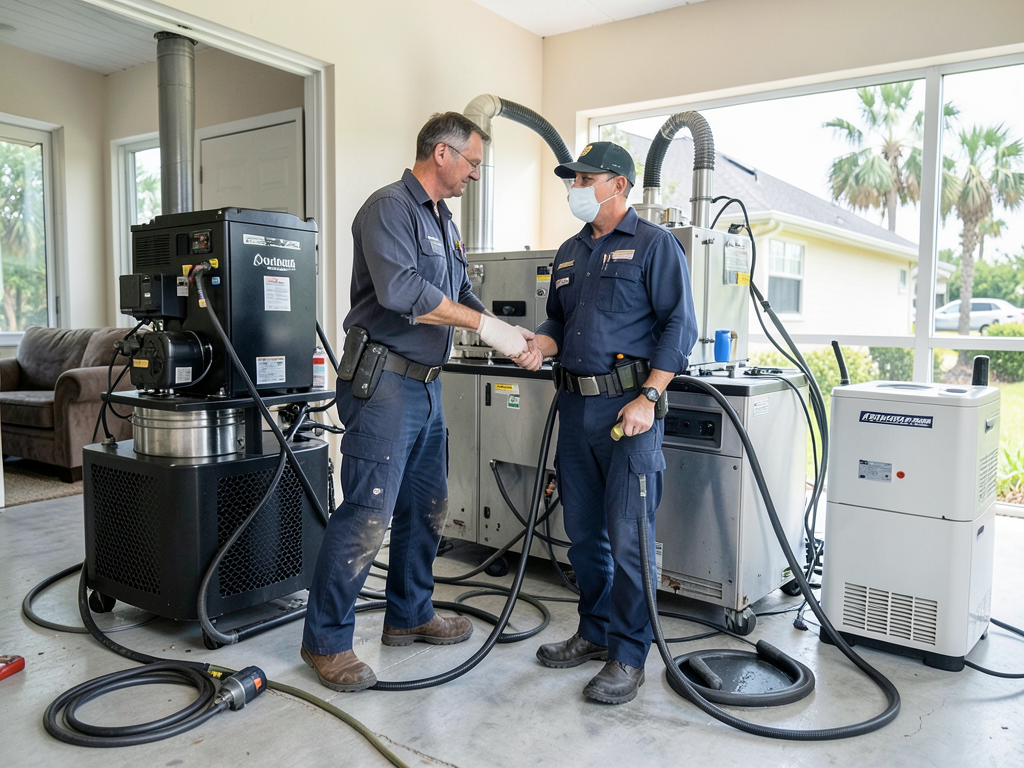
Water damage requires industrial equipment. Professional water extraction and drying prevents mold growth and structural damage. Most Orlando restoration companies offer 24/7 emergency service.
- Start Mitigation Immediately
Remove standing water, set up fans and dehumidifiers, and protect undamaged areas. Delay increases repair costs and mold risk.
Common Water Damage Scenarios in Orlando
Orlando’s unique conditions create specific water damage patterns:
| Scenario | Common Location | Typical Cause | Response Time Needed |
|---|---|---|---|
| Hurricane-driven roof leak | Maitland historic district | High winds, debris impact | Within 24 hours |
| Slab leak | Kissimmee new construction | Shifting sandy soil, PEX piping | Within 4 hours |
| AC condensate overflow | College Park bungalows | Clogged drain line, humidity | Within 6 hours |
| Sewer backup | Audubon Park | Tree roots, aging clay pipes | Immediately (health hazard) |
Security Deposits and Water Damage
Florida law allows landlords to deduct from security deposits for damage beyond normal wear and tear. Water damage falls into this category when caused by tenant negligence.
Examples of tenant-caused water damage include:
- Overflowing bathtubs or sinks left unattended
- Improperly installed washing machine hoses
- Hanging items on sprinkler heads
- Blocking AC drain lines
You must document the damage with photos and provide an itemized list of deductions within 30 days. Keep receipts for repairs and cleaning services.
Local Resources for Orlando Landlords
Several Orange County resources help landlords handle water damage legally and efficiently:
- Orange County Building Safety Division – Handles code violations and permit requirements
- Orange County Health Department – Addresses mold and sanitation concerns
- Legal Aid Society of Orange County – Provides legal guidance for landlord-tenant disputes
- Florida Department of Business and Professional Regulation – Licenses mold remediators and restoration companies
Prevention Strategies
Preventing water damage saves money and legal headaches. Consider these Orlando-specific strategies:
- Install water leak detection systems that send alerts to your phone
- Schedule annual plumbing inspections, especially for older Winter Park homes
- Clean AC drain lines quarterly to prevent overflow
- Maintain proper roof drainage to handle Orlando’s heavy afternoon thunderstorms
- Educate tenants about water conservation and leak reporting
When to Call Professional Restoration
Professional water damage restoration becomes necessary when:
- Standing water exceeds one inch
- Water has been present more than 24 hours
- Affected area exceeds 100 square feet
- You suspect mold growth
- Structural components like drywall or flooring are saturated
Professional restoration companies use industrial-grade equipment including truck-mounted water extractors, commercial dehumidifiers, and air movers. They also provide documentation needed for insurance claims and legal compliance.
Tenant Rights During Restoration
When extensive water damage requires major repairs, tenants have specific rights:
- Right to temporary relocation if the unit becomes uninhabitable
- Right to rent abatement for days they cannot occupy the unit
- Right to break the lease without penalty if repairs take more than seven days
- Right to withhold rent if you don’t begin repairs within seven days
Communication prevents disputes. Keep tenants informed about repair timelines and their options. Document all conversations and agreements in writing.
Conclusion: Acting Fast Protects Your Investment
Water damage in Orlando rentals demands immediate action. Florida law gives you seven days to make repairs, but mold can grow in 24-48 hours. The humid Central Florida climate means delays cost more than just repair bills—they can lead to health hazards, legal disputes, and lost rental income.
Understanding your legal obligations under Florida Statute 83.51 and Orange County codes helps you respond appropriately. Having a relationship with professional restoration services ensures you can act quickly when emergencies strike. Most importantly, clear communication with tenants prevents misunderstandings and protects your investment.
Don’t wait for water damage to become a legal nightmare. Prepare now by reviewing your insurance coverage, establishing relationships with restoration professionals, and educating your tenants about water damage reporting procedures.
When water damage strikes your Orlando rental property, call the experts who understand both the legal requirements and the local climate challenges. Our team provides 24/7 emergency response throughout Orlando, Winter Park, Maitland, and surrounding areas.
Need immediate help with water damage restoration? Call Reliance Water Damage Restoration Orlando at (689) 268-2233. We’re ready to respond 24/7 and help you comply with Florida law while protecting your property investment.
Frequently Asked Questions
How long does a landlord have to fix water damage in Orlando?
Florida law requires landlords to begin repairs within seven days of receiving written notice from the tenant. Emergency situations like sewage backups or major roof leaks during storms may require immediate response to prevent health hazards and additional damage.
Can a tenant withhold rent for water damage in Florida?
Yes, if the landlord fails to make necessary repairs within seven days of written notice, the tenant can withhold rent. However, they must follow specific procedures and may need to deposit the withheld rent with the court. It’s often better to communicate clearly and document all issues.
Who pays for mold remediation in Orlando rentals?
Generally, landlords pay for mold remediation if it results from maintenance issues like roof leaks or plumbing failures. If mold grows due to tenant negligence or failure to report water damage promptly, the tenant may be responsible. Documentation of the source and timing is crucial.
What qualifies as emergency water damage in Florida rentals?
Emergency water damage includes situations that pose immediate health or safety risks such as sewage backups, major roof leaks during storms, burst pipes causing flooding, or water damage affecting electrical systems. These situations typically require response within hours, not days.
How do I prove water damage was caused by normal wear and tear?
Document the age and condition of plumbing, roofing, and appliances when tenants move in. Keep maintenance records and inspection reports. Have a professional plumber or roofer assess the cause of damage. This documentation helps distinguish between normal wear and tenant negligence.
{
“@context”: “https://schema.org”,
“@type”: “BlogPosting”,
“headline”: “What Every Orlando Landlord Needs to Know About Water Leak Responsibilities”,
“description”: “Learn Orlando landlord water leak laws, tenant rights, and repair timelines under Florida Statute 83.51. Get local Orange County restoration help today.”,
“wordCount”: 1734,
“datePublished”: “2026-05-15T09:46:00.000Z”,
“dateModified”: “2026-05-15T09:46:00.000Z”,
“inLanguage”: “en-US”,
“mainEntityOfPage”: {
“@type”: “WebPage”,
“@id”: “https://reliancewaterdamagerestorationorlando.com”
},
“publisher”: {
“@type”: “LocalBusiness”,
“name”: “Reliance Water Damage Restoration Orlando”,
“url”: “https://reliancewaterdamagerestorationorlando.com”
},
“author”: {
“@type”: “Organization”,
“name”: “Reliance Water Damage Restoration Orlando”,
“url”: “https://reliancewaterdamagerestorationorlando.com”
},
“image”: {
“@type”: “ImageObject”,
“url”: “https://reliancewaterdamagerestorationorlando.com/wp-content/uploads/2026/03/what-every-orlando-landlord-needs-to-know-about-wa-1.png”
}
}
{
“@context”: “https://schema.org”,
“@type”: “LocalBusiness”,
“name”: “Reliance Water Damage Restoration Orlando”,
“url”: “https://reliancewaterdamagerestorationorlando.com”,
“address”: {
“@type”: “PostalAddress”,
“addressLocality”: “Orlando”
},
“areaServed”: {
“@type”: “City”,
“name”: “Orlando”
}
}
{
“@context”: “https://schema.org”,
“@type”: “FAQPage”,
“mainEntity”: [
{
“@type”: “Question”,
“name”: “How long does a landlord have to fix water damage in Orlando?”,
“acceptedAnswer”: {
“@type”: “Answer”,
“text”: “Florida law requires landlords to begin repairs within seven days of receiving written notice from the tenant. Emergency situations like sewage backups or major roof leaks during storms may require immediate response to prevent health hazards and additional damage.”
}
},
{
“@type”: “Question”,
“name”: “Can a tenant withhold rent for water damage in Florida?”,
“acceptedAnswer”: {
“@type”: “Answer”,
“text”: “Yes, if the landlord fails to make necessary repairs within seven days of written notice, the tenant can withhold rent. However, they must follow specific procedures and may need to deposit the withheld rent with the court. It’s often better to communicate clearly and document all issues.”
}
},
{
“@type”: “Question”,
“name”: “Who pays for mold remediation in Orlando rentals?”,
“acceptedAnswer”: {
“@type”: “Answer”,
“text”: “Generally, landlords pay for mold remediation if it results from maintenance issues like roof leaks or plumbing failures. If mold grows due to tenant negligence or failure to report water damage promptly, the tenant may be responsible. Documentation of the source and timing is crucial.”
}
},
{
“@type”: “Question”,
“name”: “What qualifies as emergency water damage in Florida rentals?”,
“acceptedAnswer”: {
“@type”: “Answer”,
“text”: “Emergency water damage includes situations that pose immediate health or safety risks such as sewage backups, major roof leaks during storms, burst pipes causing flooding, or water damage affecting electrical systems. These situations typically require response within hours, not days.”
}
},
{
“@type”: “Question”,
“name”: “How do I prove water damage was caused by normal wear and tear?”,
“acceptedAnswer”: {
“@type”: “Answer”,
“text”: “Document the age and condition of plumbing, roofing, and appliances when tenants move in. Keep maintenance records and inspection reports. Have a professional plumber or roofer assess the cause of damage. This documentation helps distinguish between normal wear and tenant negligence.”
}
}
]
}
{
“@context”: “https://schema.org”,
“@type”: “HowTo”,
“name”: “Emergency Water Damage Response”,
“step”: [
{
“@type”: “HowToStep”,
“position”: 1,
“name”: “Stop the Water Source”,
“text”: “Locate the main shut-off valve. In most Orlando homes, this is near the water meter or in the garage. Turn it clockwise to stop water flow.”
},
{
“@type”: “HowToStep”,
“position”: 2,
“name”: “Document Everything”,
“text”: “Take photos and videos of all damage before cleaning up. Document the date, time, and cause if known. This protects you legally and helps with insurance claims.”
},
{
“@type”: “HowToStep”,
“position”: 3,
“name”: “Notify the Tenant”,
“text”: “Call or text the tenant immediately. Confirm they’re safe and explain your response plan. Written notice within 24 hours satisfies legal requirements.”
},
{
“@type”: “HowToStep”,
“position”: 4,
“name”: “Call Restoration Professionals”,
“text”: “Water damage requires industrial equipment. Professional water extraction and drying prevents mold growth and structural damage. Most Orlando restoration companies offer 24/7 emergency service.”
},
{
“@type”: “HowToStep”,
“position”: 5,
“name”: “Start Mitigation Immediately”,
“text”: “Remove standing water, set up fans and dehumidifiers, and protect undamaged areas. Delay increases repair costs and mold risk.”
}
],
“image”: “https://reliancewaterdamagerestorationorlando.com/wp-content/uploads/2026/03/what-every-orlando-landlord-needs-to-know-about-wa-1.png”
}
{
“@context”: “https://schema.org”,
“@type”: “BreadcrumbList”,
“itemListElement”: [
{
“@type”: “ListItem”,
“position”: 1,
“name”: “Home”,
“item”: “https://reliancewaterdamagerestorationorlando.com”
},
{
“@type”: “ListItem”,
“position”: 2,
“name”: “Blog”,
“item”: “https://reliancewaterdamagerestorationorlando.com/blog”
},
{
“@type”: “ListItem”,
“position”: 3,
“name”: “What Every Orlando Landlord Needs to Know About Water Leak Responsibilities”
}
]
}
{
“@context”: “https://schema.org”,
“@type”: “Service”,
“serviceType”: “Water Damage Restoration”,
“provider”: {
“@type”: “LocalBusiness”,
“name”: “Reliance Water Damage Restoration Orlando”,
“url”: “https://reliancewaterdamagerestorationorlando.com”
},
“areaServed”: {
“@type”: “City”,
“name”: “Orlando”
},
“description”: “Learn Orlando landlord water leak laws, tenant rights, and repair timelines under Florida Statute 83.51. Get local Orange County restoration help today.”
}