Dealing with the Stress and Anxiety of a Flooded House (A Guide for Orlando Families)
Your home just flooded. Water covers your floors. Your furniture is soaked. You feel overwhelmed and unsure what to do next. You are not alone. Many Orlando families face this same crisis every year during hurricane season or after sudden afternoon thunderstorms. Hardwood Floor Water Damage Restoration in Winter Garden.
This guide walks you through the immediate steps to take when your house floods. It covers both the physical restoration process and the emotional recovery journey. You will learn how to protect your family’s safety, document damage for insurance claims, and find local support resources.. Read more about A Newcomers Guide to Preventing Flood Damage During Your First Orlando Hurricane Season.
Central Florida’s subtropical climate creates unique challenges. High humidity levels can make drying take longer. Mold can start growing within 24-48 hours. The stress of dealing with these issues while trying to maintain normal life feels overwhelming.
Professional help exists. Local restoration experts understand Orlando’s specific building codes and weather patterns. They can guide you through the entire recovery process while you focus on your family’s wellbeing. Professional Mold Removal and Remediation Services in Lake Nona.
Immediate Safety Steps After Your House Floods
Your first priority is keeping your family safe. Floodwater creates multiple hazards that can cause serious injury or illness. Emergency Water Damage Restoration for Windermere Homeowners.
Turn off electricity at the main breaker if water has reached electrical outlets or appliances. Never step into standing water where electricity might be present. Call your utility company if you cannot safely access the breaker box.
Check for structural damage before entering rooms. Look for sagging ceilings, cracked walls, or floors that feel unstable. Water can weaken building materials quickly. If you see signs of structural compromise, leave the area and call a professional inspector. What to Do When Your Ceiling Starts Leaking in Baldwin Park.
Wear protective gear before touching anything. Rubber boots, gloves, and eye protection prevent contact with contaminated water. Floodwater often contains sewage, chemicals, and bacteria that can cause serious illness. The Best Way to Handle Sewage Backup Cleanup in College Park.
Document everything before starting cleanup. Take photos and videos of all damaged areas. Capture close-ups of water levels, damaged furniture, and structural issues. This documentation helps with insurance claims later.
Start removing water as soon as it is safe. Use buckets, mops, or a wet vacuum if electricity is off in affected areas. The longer water sits, the more damage it causes. Mold begins growing within 24-48 hours in Orlando’s humid climate.
Understanding Flood Water Categories and Health Risks
Not all flood water carries the same level of contamination. Understanding these differences helps you protect your family’s health.
Clean water comes from broken pipes, rainwater, or appliance malfunctions. This water starts safe but becomes contaminated after sitting for 48 hours. It poses minimal initial health risks but can cause mold growth.
Gray water contains significant contamination from sources like washing machines, dishwashers, or clean toilet overflows. This water may cause illness if ingested or if it contacts open wounds. Gray water becomes black water after 48 hours.
Black water contains sewage, chemicals, or other highly toxic substances. This includes water from toilet backups, flooding from rivers or canals, or water that has been standing for more than 48 hours. Black water poses serious health risks and requires professional handling.
Orlando’s proximity to lakes and retention ponds increases black water risks during heavy storms. Storm surge can push contaminated water into homes near waterways like Lake Underhill or Lake Eola.
Children, elderly family members, and people with compromised immune systems face higher risks from contaminated water exposure. Keep vulnerable family members away from affected areas until professional cleanup completes.
The Professional Restoration Process in Orlando
Professional restoration companies follow specific protocols to ensure complete recovery. Understanding this process helps you know what to expect.
Initial assessment begins with moisture detection using specialized equipment. Technicians check inside walls, under floors, and in crawl spaces where water hides. Orlando’s concrete block construction requires different techniques than wood-frame homes in other regions.
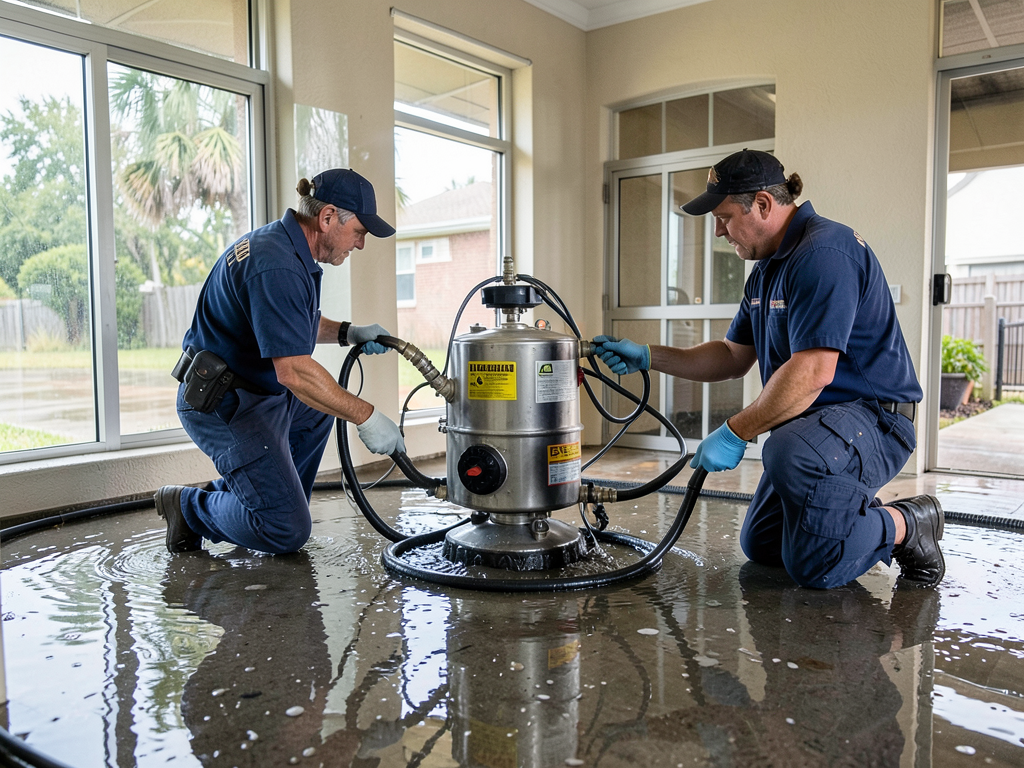
Water extraction uses industrial pumps and vacuums to remove standing water quickly. Speed matters because every hour water remains increases damage and mold risk. Professional equipment removes water much faster than household tools.
Drying and dehumidification follow extraction. Industrial air movers and dehumidifiers run continuously for several days. Orlando’s high humidity means drying takes longer than in drier climates. Technicians monitor moisture levels daily to ensure complete drying.
Cleaning and sanitizing eliminate bacteria, mold spores, and odors. This step includes antimicrobial treatments that prevent future mold growth. Professional cleaning reaches areas household products cannot access.
Restoration returns your home to pre-flood condition. This may include replacing drywall, flooring, or cabinetry. Some companies coordinate with contractors to handle repairs, simplifying the recovery process for stressed homeowners.
The entire process typically takes 3-7 days for clean water damage. Gray or black water situations may require 7-14 days due to additional decontamination steps.
Navigating Insurance Claims After Flood Damage
Insurance claims after flooding create additional stress. Understanding the process helps you avoid common mistakes.
Standard homeowners insurance does not cover flood damage from storms or rising water. You need separate flood insurance through the National Flood Insurance Program or private insurers. Check your policy immediately after flooding occurs. National Flood Insurance Program.
Contact your insurance company within 24 hours of discovering damage. Most policies require prompt notification. Have your policy number ready and describe the damage clearly.
Document everything thoroughly. Take photos before moving anything. Keep damaged items until the adjuster sees them. Create a detailed inventory of damaged belongings including approximate ages and values.
Prevent further damage if possible. Insurance companies expect you to take reasonable steps to minimize additional harm. This might include covering broken windows or moving undamaged items to dry areas.
Keep all receipts for expenses related to the flood. This includes temporary housing, meals, and emergency supplies. Many policies cover additional living expenses while your home becomes habitable.
Work with your restoration company on documentation. Professional companies understand insurance requirements and can provide detailed reports that support your claim.
Florida law requires insurance companies to acknowledge claims within 14 days. They must make coverage decisions within 90 days. If you feel your claim receives unfair treatment, contact the Florida Department of Financial Services for assistance.
Managing Emotional Trauma After Property Loss
Flood damage creates emotional trauma that extends beyond physical repairs. Understanding this helps you address both aspects of recovery.
Common emotional reactions include anxiety, depression, anger, and helplessness. You might experience sleep problems, difficulty concentrating, or loss of appetite. These reactions are normal responses to traumatic events.
Children often show trauma through behavioral changes. They might become clingy, have nightmares, or regress in developmental milestones. Maintain routines as much as possible and answer their questions honestly at an age-appropriate level.
Displacement trauma occurs when you cannot stay in your home during repairs. This disrupts your sense of security and routine. Find ways to maintain normalcy through regular meal times, bedtime routines, and familiar activities.
Financial stress compounds emotional trauma. Concerns about repair costs, insurance coverage, and temporary housing create additional anxiety. Focus on what you can control and seek professional guidance for complex decisions.
Orlando offers several mental health resources for disaster recovery. The Orange County Mental Health Association provides counseling services. Local hospitals offer crisis intervention. Many therapists specialize in trauma recovery.
Support groups connect you with others facing similar challenges. Sharing experiences reduces isolation and provides practical coping strategies. Check with local community centers or religious organizations for group meetings.
Practice self-care during recovery. This includes adequate sleep, healthy meals, and physical activity when possible. Even brief walks or stretching exercises reduce stress hormones and improve mood.
Set realistic expectations for recovery timelines. Physical repairs take time. Emotional healing also requires patience. Celebrate small progress milestones rather than focusing only on remaining challenges.
Preventing Future Flood Damage in Orlando Homes
After experiencing one flood, you want to prevent future incidents. Several strategies reduce your home’s vulnerability to water damage.
Improve drainage around your home’s foundation. Ensure gutters and downspouts direct water at least five feet away from the house. Grade soil so it slopes away from the foundation at a rate of six inches per ten feet.
Install a sump pump with battery backup in areas prone to flooding. Orlando’s afternoon thunderstorms can overwhelm drainage systems quickly. Battery backup ensures operation during power outages.
Consider flood vents in foundation walls. These allow water to flow through rather than building pressure against walls. Building codes in flood-prone areas may require these vents.
Elevate critical utilities above potential flood levels. This includes water heaters, HVAC systems, and electrical panels. Many Orlando homes have these utilities in attics or on second floors already.
Seal foundation cracks and gaps where pipes enter the home. Even small openings allow water intrusion during heavy storms. Use hydraulic cement or epoxy sealants designed for wet conditions.
Maintain your roof regularly. Missing shingles or damaged flashing allow water entry during storms. Orlando’s intense sun and frequent storms accelerate roof deterioration.
Consider impact-resistant windows and doors. These provide better protection against wind-driven rain during hurricanes. They also improve energy efficiency, reducing cooling costs in Orlando’s hot climate.
Review and update your insurance coverage annually. Building codes and flood zone maps change. Ensure your coverage reflects current risks and replacement costs.
Local Orlando Resources for Flood Recovery
Several organizations provide assistance during flood recovery. Knowing these resources helps you access needed support quickly.
The American Red Cross Central Florida Region provides emergency shelter, food, and supplies after disasters. They operate shelters throughout Orange County when needed. Contact them at their Orlando office or through their emergency hotline. American Red Cross.
Orange County Emergency Management coordinates disaster response and recovery. They provide information about evacuation routes, shelter locations, and available assistance programs. Their website offers real-time updates during active emergencies.
The City of Orlando offers debris removal services after major storms. They coordinate with waste management companies to clear streets and collect damaged materials from curbsides. Check their website for pickup schedules and guidelines.
Local hardware stores like Home Depot and Lowe’s provide emergency supplies and equipment rentals. Many locations stay open during recovery efforts to support community needs. Their staff can advise on appropriate cleanup products for different situations.
Community action agencies offer financial assistance for uninsured losses. Catholic Charities, United Way, and local churches often coordinate donation drives and volunteer efforts to support affected families.
Public health departments monitor water quality and disease outbreaks after flooding. They provide guidance on safe cleanup practices and when it is safe to return to affected areas. Follow their recommendations for protecting your family’s health.
Local contractors specializing in disaster recovery understand Orlando’s building requirements. They can navigate permit processes and ensure repairs meet current codes. Ask for references and verify licenses before hiring any contractor.
Understanding Orlando’s Flood Risk Areas
Certain Orlando neighborhoods face higher flood risks due to geography and infrastructure. Understanding these patterns helps you prepare or choose appropriate mitigation strategies.
Areas near the St. Johns River and its tributaries experience periodic flooding during heavy rains. Neighborhoods in the Conway and Belle Isle areas face these risks due to their proximity to water bodies.
Low-lying areas in downtown Orlando and surrounding neighborhoods can flood during intense rainfall. The combination of concrete surfaces and aging storm drains creates temporary flooding in streets and nearby properties.
Communities along Shingle Creek, including areas near Orlando International Airport, face flood risks from both rainfall and upstream water releases. The creek’s watershed covers a large area that drains through these neighborhoods.
Historic districts with older infrastructure may experience more frequent flooding. Clay County’s aging pipes and drainage systems cannot handle modern rainfall intensities as effectively as newer developments.
New construction in previously undeveloped areas can change local drainage patterns. What did not flood historically might become vulnerable as surrounding land use changes.
Elevation varies significantly across Orlando. Properties at higher elevations generally face lower flood risks but may still experience water intrusion from roof leaks or surface runoff.
Check FEMA flood maps for your specific property. These maps show flood zones and base flood elevations. Your insurance agent can help you understand what these designations mean for your coverage needs. FEMA.
Long-Term Recovery and Moving Forward
Recovery extends beyond physical repairs. Building resilience helps you and your family move forward after flood trauma.
Create a family emergency plan that includes flood scenarios. Practice evacuation routes. Assemble a disaster supply kit with essentials like medications, important documents, and basic supplies. Preparation reduces anxiety about future events.
Document your recovery journey. Keep a journal or take photos showing progress. This helps you recognize how far you have come and provides perspective during difficult moments.
Connect with neighbors who experienced similar damage. Community support provides emotional comfort and practical advice. You might share contractor recommendations or learn about local resources others have discovered.
Consider professional counseling if flood trauma interferes with daily functioning after several months. Post-traumatic stress can develop after any disaster experience. Early intervention prevents long-term mental health impacts.
Review and update your emergency preparations annually. Replace expired supplies. Update contact information. Practice your plan with all family members. Regular review keeps you prepared without constant worry.
Celebrate your home’s recovery milestones. Whether it is the first night back home or the completion of final repairs, acknowledge these achievements. Your home represents more than physical structure; it provides security and comfort for your family.
Remember that recovery takes time. Physical repairs follow a logical sequence that cannot be rushed. Emotional healing also progresses at its own pace. Be patient with yourself and your family as you rebuild both your home and your sense of security.
Orlando’s community demonstrates remarkable resilience after disasters. Neighbors help neighbors. Local businesses support recovery efforts. Professional services stand ready to assist. You are part of this community, and support surrounds you throughout your recovery journey.
If you need immediate assistance with flood damage, call our experienced team at (689) 268-2233. We provide 24/7 emergency response throughout Orlando and understand the unique challenges facing Central Florida families.
Frequently Asked Questions
How long does flood damage restoration take in Orlando?
Most clean water damage restoration takes 3-7 days in Orlando’s humid climate. Gray or black water situations may require 7-14 days due to additional decontamination steps. Drying times vary based on humidity, temperature, and the extent of damage.
Will my homeowners insurance cover flood damage?
Standard homeowners insurance does not cover flood damage from storms or rising water. You need separate flood insurance through the National Flood Insurance Program or private insurers. Check your policy immediately after flooding occurs.
When should I call a professional for flood cleanup?
Call professionals if water covers more than one room, if you suspect contaminated water, or if water has been standing for more than 24 hours. Professional equipment and expertise prevent mold growth and ensure complete drying.
How can I prevent mold growth after flooding?
Begin drying within 24-48 hours using fans, dehumidifiers, and professional equipment. Remove wet materials like carpet and drywall. Clean all surfaces with antimicrobial solutions. Monitor moisture levels for several weeks after initial drying.
{
“@context”: “https://schema.org”,
“@type”: “BlogPosting”,
“headline”: “Dealing with the Stress and Anxiety of a Flooded House (A Guide for Orlando Families)”,
“description”: “Orlando families can recover from flood damage with expert restoration, insurance guidance, and emotional support. Learn immediate steps and local resources.”,
“wordCount”: 2539,
“datePublished”: “2026-06-18T07:08:00.000Z”,
“dateModified”: “2026-06-18T07:08:00.000Z”,
“inLanguage”: “en-US”,
“mainEntityOfPage”: {
“@type”: “WebPage”,
“@id”: “https://reliancewaterdamagerestorationorlando.com”
},
“publisher”: {
“@type”: “LocalBusiness”,
“name”: “Reliance Water Damage Restoration Orlando”,
“url”: “https://reliancewaterdamagerestorationorlando.com”
},
“author”: {
“@type”: “Organization”,
“name”: “Reliance Water Damage Restoration Orlando”,
“url”: “https://reliancewaterdamagerestorationorlando.com”
},
“image”: {
“@type”: “ImageObject”,
“url”: “https://reliancewaterdamagerestorationorlando.com/wp-content/uploads/2026/03/dealing-with-the-stress-and-anxiety-of-a-flooded-h-1.png”
}
}
{
“@context”: “https://schema.org”,
“@type”: “LocalBusiness”,
“name”: “Reliance Water Damage Restoration Orlando”,
“url”: “https://reliancewaterdamagerestorationorlando.com”,
“address”: {
“@type”: “PostalAddress”,
“addressLocality”: “Orlando”
},
“areaServed”: {
“@type”: “City”,
“name”: “Orlando”
}
}
{
“@context”: “https://schema.org”,
“@type”: “FAQPage”,
“mainEntity”: [
{
“@type”: “Question”,
“name”: “How long does flood damage restoration take in Orlando?”,
“acceptedAnswer”: {
“@type”: “Answer”,
“text”: “Most clean water damage restoration takes 3-7 days in Orlando’s humid climate. Gray or black water situations may require 7-14 days due to additional decontamination steps. Drying times vary based on humidity, temperature, and the extent of damage.”
}
},
{
“@type”: “Question”,
“name”: “Will my homeowners insurance cover flood damage?”,
“acceptedAnswer”: {
“@type”: “Answer”,
“text”: “Standard homeowners insurance does not cover flood damage from storms or rising water. You need separate flood insurance through the National Flood Insurance Program or private insurers. Check your policy immediately after flooding occurs.”
}
},
{
“@type”: “Question”,
“name”: “When should I call a professional for flood cleanup?”,
“acceptedAnswer”: {
“@type”: “Answer”,
“text”: “Call professionals if water covers more than one room, if you suspect contaminated water, or if water has been standing for more than 24 hours. Professional equipment and expertise prevent mold growth and ensure complete drying.”
}
},
{
“@type”: “Question”,
“name”: “How can I prevent mold growth after flooding?”,
“acceptedAnswer”: {
“@type”: “Answer”,
“text”: “Begin drying within 24-48 hours using fans, dehumidifiers, and professional equipment. Remove wet materials like carpet and drywall. Clean all surfaces with antimicrobial solutions. Monitor moisture levels for several weeks after initial drying.”
}
}
]
}
{
“@context”: “https://schema.org”,
“@type”: “BreadcrumbList”,
“itemListElement”: [
{
“@type”: “ListItem”,
“position”: 1,
“name”: “Home”,
“item”: “https://reliancewaterdamagerestorationorlando.com”
},
{
“@type”: “ListItem”,
“position”: 2,
“name”: “Blog”,
“item”: “https://reliancewaterdamagerestorationorlando.com/blog”
},
{
“@type”: “ListItem”,
“position”: 3,
“name”: “Dealing with the Stress and Anxiety of a Flooded House (A Guide for Orlando Families)”
}
]
}
{
“@context”: “https://schema.org”,
“@type”: “Service”,
“serviceType”: “Water Damage Restoration”,
“provider”: {
“@type”: “LocalBusiness”,
“name”: “Reliance Water Damage Restoration Orlando”,
“url”: “https://reliancewaterdamagerestorationorlando.com”
},
“areaServed”: {
“@type”: “City”,
“name”: “Orlando”
},
“description”: “Orlando families can recover from flood damage with expert restoration, insurance guidance, and emotional support. Learn immediate steps and local resources.”
}