Navigating Water Damage Responsibility in Multi-Story Condos Around Downtown Orlando
Water damage in multi-story condominiums creates immediate stress and confusion about financial responsibility. When pipes burst, appliances fail, or storms breach roofs, the question of who pays becomes urgent. In Orlando’s dense downtown condo market, understanding Florida law and your HOA’s master policy can save you thousands of dollars and weeks of disputes. Florida Statute 718.111(11).
The humid Central Florida climate accelerates mold growth within 24-48 hours of water exposure. This biological timeline makes immediate action critical. Whether you own a unit in Thornton Park, near Lake Eola, or in the growing Creative Village district, the legal framework remains consistent across Orange County. Emergency Water Damage Restoration for Windermere Homeowners.
Florida Statute 718.111(11): The Legal Foundation
Florida Statute 718.111(11) establishes the baseline for responsibility in condominiums. This statute defines what constitutes the association’s property versus individual unit owner property. The law uses the “drywall in” standard, meaning the association typically maintains everything from the exterior walls inward, including the concrete slab and roof structure.. Read more about A Guide to HOA Responsibility for Water Damage in Your MetroWest Condo.
Individual unit owners maintain everything from the drywall inward, including flooring, cabinetry, appliances, and personal property. However, this seemingly straightforward division becomes complex when water travels through multiple units or originates from common elements. Hardwood Floor Water Damage Restoration in Winter Garden.
The statute also addresses negligence. If an upstairs neighbor’s washing machine hose bursts due to lack of maintenance, they bear responsibility for damages to your unit below. Conversely, if a common element pipe in the wall fails, the association typically covers repairs to both the pipe and resulting damage.
Master Policy vs. HO-6 Insurance
Most Orlando condo associations carry a master insurance policy that covers the building’s structure, common areas, and liability. This policy typically excludes personal property and interior finishes within individual units. Unit owners purchase HO-6 policies to cover their portion of responsibility.
The HO-6 policy fills critical gaps. It covers your flooring, cabinetry, appliances, and personal belongings. It also provides liability protection if someone is injured in your unit and loss of use coverage if you must temporarily relocate during repairs.
Understanding your specific policy limits proves essential. Some HO-6 policies have low coverage limits for water damage or exclude certain types of plumbing failures. Reviewing your declaration page prevents surprises during claims. Water Bug & Pest Infestations.
Common Scenarios and Liability
Different water damage scenarios trigger different liability chains. The source of the water and the path it travels determine responsibility.
Scenario A: Upstairs Neighbor’s Appliance Fails
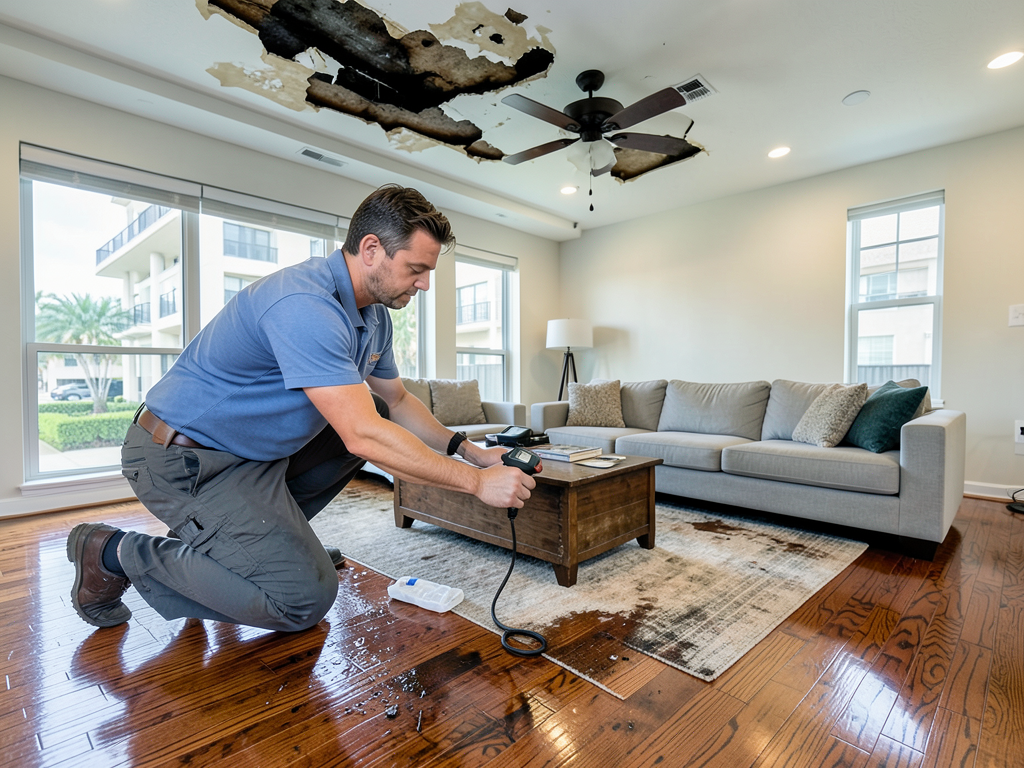
Your downstairs neighbor’s water heater ruptures at 2 AM. Water cascades through your ceiling, damaging drywall, flooring, and furniture. Under Florida law, the upstairs neighbor bears responsibility since their negligence caused the damage. Their HO-6 policy should cover your repairs and your temporary relocation costs. What to Do When Your Ceiling Starts Leaking in Baldwin Park.
However, if they lack adequate insurance or become unresponsive, your HO-6 policy becomes your primary recovery source. Your insurance company then pursues subrogation against the negligent neighbor’s insurer.
Scenario B: Common Area Pipe Bursts
A pressurized water line in the wall between units fails. Water spreads through multiple units before anyone discovers the leak. The association’s master policy covers the failed pipe and structural repairs to all affected units. Individual unit owners’ HO-6 policies cover interior finishes, flooring, and personal property.
This scenario often creates disputes over finish matching. If your hardwood floors require replacement, should they match the original or current market standards? These details appear in your HOA’s governing documents.. Read more about Should You Use the Preferred Vendor Your Insurance Company Recommends in Altamonte Springs?.
Scenario C: Roof Leak During Orlando Storm
Heavy afternoon thunderstorms overwhelm your building’s roof flashing. Water penetrates the ceiling, damaging drywall and creating ideal conditions for mold growth. The association’s master policy covers roof repairs and structural damage. Your HO-6 policy covers interior ceiling finishes, paint, and any damaged personal property.
Orlando’s building code requires specific roofing standards for hurricane resistance. If the association failed to maintain code-compliant roofing, liability questions become more complex.
The ‘Dry-Out’ vs. ‘Reconstruction’ Distinction
Water damage restoration involves two distinct phases: mitigation and reconstruction. Mitigation includes water extraction, drying, and preventing secondary damage like mold. Reconstruction involves rebuilding damaged structures to their pre-loss condition.
Florida law and insurance policies often treat these phases differently. The responsible party for the initial cause typically covers mitigation costs to prevent further damage. However, reconstruction responsibility follows the “drywall in” rule regardless of fault.
This distinction creates practical challenges. If an upstairs neighbor’s pipe bursts, they pay for emergency water extraction and drying. But the association’s master policy pays for replacing drywall, insulation, and structural repairs in your ceiling.
Immediate Steps for Orlando Condo Owners
When water damage occurs, specific actions protect your health, property, and insurance claim.
- Stop the Water Source
Locate and shut off the nearest water valve. If you cannot find the source, contact your HOA’s emergency line immediately.
- Document Everything
Take photos and videos of all damage before cleanup begins. Include time stamps and wide-angle shots showing the extent of damage.
- Notify Your HOA
Report the damage in writing through your association’s official channels. Keep copies of all communications.
- Mitigate Further Damage
Move wet items to dry areas. Place buckets under active leaks. Do not attempt major repairs yourself.
- Call a Certified Restoration Company
Contact an IICRC-certified water damage restoration company immediately. Orlando’s humidity makes mold growth likely within 48 hours. IICRC certification.
Mold Remediation in Florida Condos
Florida’s humid climate creates ideal conditions for mold growth after water damage. The state requires specific licensing for mold remediation through the Florida Department of Business and Professional Regulation. Professional Mold Removal and Remediation Services in Lake Nona.
Mold remediation involves containment, removal of affected materials, and clearance testing. The responsible party for water damage also bears responsibility for mold prevention and remediation if the mold results from their negligence.
Professional remediation companies must follow Florida’s mold remediation standards. These include negative air pressure during removal, HEPA filtration, and post-remediation verification testing.
Subrogation and Insurance Recovery
Subrogation allows your insurance company to recover costs from the responsible party’s insurer. This process becomes complex in multi-unit buildings where fault determination requires investigation.
Your insurance company may pay your claim initially, then pursue recovery from the negligent party. This process can take months or years. During this time, you must cooperate with your insurer’s investigation and provide requested documentation.
Understanding your policy’s subrogation clause helps manage expectations. Some policies waive subrogation rights if you accept partial payment from another party without your insurer’s consent.
Orlando Building Code Considerations
Orlando’s building code incorporates Florida’s High-Velocity Hurricane Zone requirements. These standards affect roofing, window installations, and exterior wall systems. Compliance with current codes becomes relevant when determining negligence in water intrusion cases.
Older buildings in neighborhoods like Thornton Park or near Lake Eola may not meet current standards. However, grandfather clauses often protect existing structures from retroactive code compliance unless major renovations occur.
Preventing Water Damage in Condos
Proactive maintenance reduces water damage risk in multi-story buildings. Regular inspections of washing machine hoses, water heaters, and HVAC drain lines prevent common failure points.
Installing water leak detection systems provides early warning. These systems can automatically shut off water supply when leaks are detected, limiting damage extent.
Understanding your building’s plumbing layout helps identify potential failure points. Buildings with shared plumbing stacks require coordinated maintenance among multiple unit owners.
Documentation and Record Keeping
Maintaining detailed records supports insurance claims and liability determinations. Keep copies of your HOA’s governing documents, insurance policies, and maintenance records.
Document all communications with your HOA, neighbors, and insurance companies. Written records prevent disputes over what was reported and when.
Photos of your unit’s condition before damage occurs establish baselines for finish matching and damage extent determination.
Frequently Asked Questions
Who pays for water damage if the cause cannot be determined?
When the water source remains unidentified, each party’s insurance typically covers their respective damages. The association’s master policy covers common elements, while individual HO-6 policies cover unit interiors. This scenario often requires professional investigation to determine the most likely source.
How long do I have to report water damage to my insurance company?
Most insurance policies require prompt reporting, typically within 14-30 days of discovery. However, immediate reporting is always best practice. Delayed reporting can result in claim denial if the insurer argues you failed to mitigate damages.
Can my HOA charge me for water damage repairs?
Your HOA can charge you if you caused the damage through negligence or if your unit’s interior finishes require repair. However, they cannot charge you for common element repairs covered by the master policy. Review your association’s covenants for specific assessment provisions.
What if my upstairs neighbor refuses to cooperate with repairs?
Document all attempts to contact the neighbor. Notify your HOA in writing about the situation. Your insurance company can pursue subrogation regardless of neighbor cooperation. In extreme cases, small claims court may become necessary to recover costs.
Working with Restoration Professionals
Choosing the right restoration company affects claim outcomes and repair quality. Look for IICRC certification, local experience, and familiarity with Florida’s building codes and insurance requirements.
Professional restoration companies provide detailed documentation for insurance claims. This includes moisture mapping, damage assessment, and repair specifications. Quality documentation often determines claim approval and payment amounts.
Restoration companies coordinate with insurance adjusters, HOAs, and contractors. This coordination streamlines the repair process and prevents delays caused by miscommunication.
Cost Factors in Water Damage Restoration
Restoration costs vary based on damage extent, building materials, and required repairs. Emergency mitigation typically costs less than delayed response due to secondary damage like mold.
Reconstruction costs depend on finish quality and code compliance requirements. Matching existing finishes in older buildings often costs more than standard replacements.
Insurance deductibles apply to both mitigation and reconstruction phases. Understanding your policy’s deductible structure helps budget for potential out-of-pocket expenses.
Legal Resources for Condo Owners
Florida’s Department of Business and Professional Regulation oversees condominium associations. They provide resources for dispute resolution and regulatory compliance.. Read more about How to Minimize Business Interruption After a Major Water Leak in Your Orlando Storefront.
Local attorneys specializing in condominium law can review governing documents and provide specific guidance for your situation. Many offer initial consultations to assess case merits.
Public adjusters can assist with insurance claims, particularly complex multi-party situations. They work on contingency fees based on recovered amounts.
Emergency Contact Information
Keep these numbers readily available for water damage emergencies in Orlando condos:
- Your HOA’s emergency maintenance line
- Your insurance company’s claims department
- Local water damage restoration companies with 24/7 service
- Orange County Building Department for code questions
- Florida DBPR for association complaints
Protecting Your Investment
Condominium ownership in Orlando’s growing downtown market represents significant financial investment. Understanding water damage responsibility protects this investment through informed decision-making during emergencies.
Regular maintenance, adequate insurance coverage, and prompt response to water incidents minimize financial exposure. Building relationships with your HOA board and neighboring unit owners facilitates cooperation during emergencies.
Knowledge of Florida law, building codes, and insurance processes empowers you to navigate water damage situations effectively. This preparation reduces stress and financial impact when incidents occur.
Water damage in multi-story condominiums requires immediate action and informed decision-making. Understanding your rights and responsibilities under Florida law helps you respond effectively when emergencies strike. Keep this guide accessible and review your insurance policies regularly to ensure adequate protection.
For immediate water damage assistance in Orlando, contact Reliance Water Damage Restoration at (689) 268-2233. Our IICRC-certified technicians provide 24/7 emergency response throughout downtown Orlando and surrounding neighborhoods.
{
“@context”: “https://schema.org”,
“@type”: “BlogPosting”,
“headline”: “Navigating Water Damage Responsibility in Multi-Story Condos Around Downtown Orlando”,
“description”: “Confused about who pays for water damage in your Orlando condo? Learn Florida law, HOA vs. owner responsibilities, and immediate steps to protect your property.”,
“wordCount”: 1906,
“datePublished”: “2026-05-07T07:14:00.000Z”,
“dateModified”: “2026-05-07T07:14:00.000Z”,
“inLanguage”: “en-US”,
“mainEntityOfPage”: {
“@type”: “WebPage”,
“@id”: “https://reliancewaterdamagerestorationorlando.com”
},
“publisher”: {
“@type”: “LocalBusiness”,
“name”: “Reliance Water Damage Restoration Orlando”,
“url”: “https://reliancewaterdamagerestorationorlando.com”
},
“author”: {
“@type”: “Organization”,
“name”: “Reliance Water Damage Restoration Orlando”,
“url”: “https://reliancewaterdamagerestorationorlando.com”
},
“image”: {
“@type”: “ImageObject”,
“url”: “https://reliancewaterdamagerestorationorlando.com/wp-content/uploads/2026/03/navigating-water-damage-responsibility-in-multi-st-1.png”
}
}
{
“@context”: “https://schema.org”,
“@type”: “LocalBusiness”,
“name”: “Reliance Water Damage Restoration Orlando”,
“url”: “https://reliancewaterdamagerestorationorlando.com”,
“address”: {
“@type”: “PostalAddress”,
“addressLocality”: “Orlando”
},
“areaServed”: {
“@type”: “City”,
“name”: “Orlando”
}
}
{
“@context”: “https://schema.org”,
“@type”: “FAQPage”,
“mainEntity”: [
{
“@type”: “Question”,
“name”: “Who pays for water damage if the cause cannot be determined?”,
“acceptedAnswer”: {
“@type”: “Answer”,
“text”: “When the water source remains unidentified, each party’s insurance typically covers their respective damages. The association’s master policy covers common elements, while individual HO-6 policies cover unit interiors. This scenario often requires professional investigation to determine the most likely source.”
}
},
{
“@type”: “Question”,
“name”: “How long do I have to report water damage to my insurance company?”,
“acceptedAnswer”: {
“@type”: “Answer”,
“text”: “Most insurance policies require prompt reporting, typically within 14-30 days of discovery. However, immediate reporting is always best practice. Delayed reporting can result in claim denial if the insurer argues you failed to mitigate damages.”
}
},
{
“@type”: “Question”,
“name”: “Can my HOA charge me for water damage repairs?”,
“acceptedAnswer”: {
“@type”: “Answer”,
“text”: “Your HOA can charge you if you caused the damage through negligence or if your unit’s interior finishes require repair. However, they cannot charge you for common element repairs covered by the master policy. Review your association’s covenants for specific assessment provisions.”
}
},
{
“@type”: “Question”,
“name”: “What if my upstairs neighbor refuses to cooperate with repairs?”,
“acceptedAnswer”: {
“@type”: “Answer”,
“text”: “Document all attempts to contact the neighbor. Notify your HOA in writing about the situation. Your insurance company can pursue subrogation regardless of neighbor cooperation. In extreme cases, small claims court may become necessary to recover costs.”
}
}
]
}
{
“@context”: “https://schema.org”,
“@type”: “HowTo”,
“name”: “Immediate Water Damage Response”,
“step”: [
{
“@type”: “HowToStep”,
“position”: 1,
“name”: “Stop the Water Source”,
“text”: “Locate and shut off the nearest water valve. If you cannot find the source, contact your HOA’s emergency line immediately.”
},
{
“@type”: “HowToStep”,
“position”: 2,
“name”: “Document Everything”,
“text”: “Take photos and videos of all damage before cleanup begins. Include time stamps and wide-angle shots showing the extent of damage.”
},
{
“@type”: “HowToStep”,
“position”: 3,
“name”: “Notify Your HOA”,
“text”: “Report the damage in writing through your association’s official channels. Keep copies of all communications.”
},
{
“@type”: “HowToStep”,
“position”: 4,
“name”: “Mitigate Further Damage”,
“text”: “Move wet items to dry areas. Place buckets under active leaks. Do not attempt major repairs yourself.”
},
{
“@type”: “HowToStep”,
“position”: 5,
“name”: “Call a Certified Restoration Company”,
“text”: “Contact an IICRC-certified water damage restoration company immediately. Orlando’s humidity makes mold growth likely within 48 hours. IICRC certification.”
}
],
“image”: “https://reliancewaterdamagerestorationorlando.com/wp-content/uploads/2026/03/navigating-water-damage-responsibility-in-multi-st-1.png”
}
{
“@context”: “https://schema.org”,
“@type”: “BreadcrumbList”,
“itemListElement”: [
{
“@type”: “ListItem”,
“position”: 1,
“name”: “Home”,
“item”: “https://reliancewaterdamagerestorationorlando.com”
},
{
“@type”: “ListItem”,
“position”: 2,
“name”: “Blog”,
“item”: “https://reliancewaterdamagerestorationorlando.com/blog”
},
{
“@type”: “ListItem”,
“position”: 3,
“name”: “Navigating Water Damage Responsibility in Multi-Story Condos Around Downtown Orlando”
}
]
}
{
“@context”: “https://schema.org”,
“@type”: “Service”,
“serviceType”: “Water Damage Restoration”,
“provider”: {
“@type”: “LocalBusiness”,
“name”: “Reliance Water Damage Restoration Orlando”,
“url”: “https://reliancewaterdamagerestorationorlando.com”
},
“areaServed”: {
“@type”: “City”,
“name”: “Orlando”
},
“description”: “Confused about who pays for water damage in your Orlando condo? Learn Florida law, HOA vs. owner responsibilities, and immediate steps to protect your property.”
}