

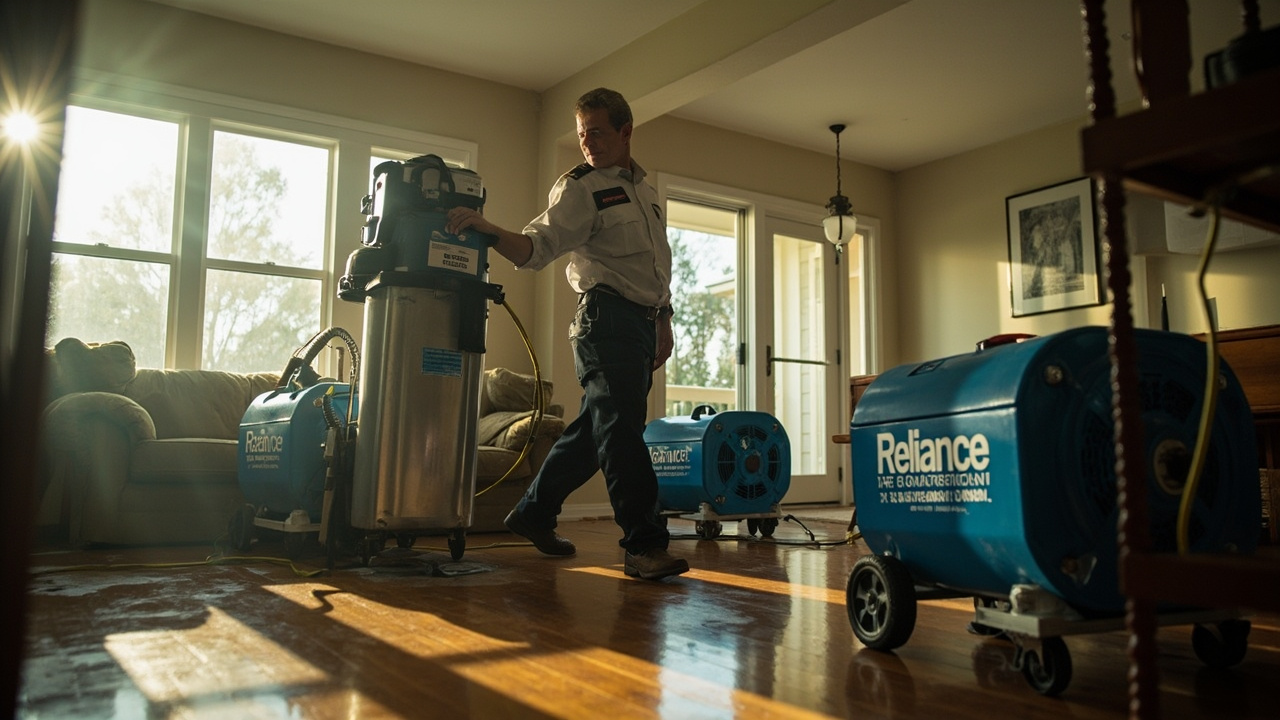
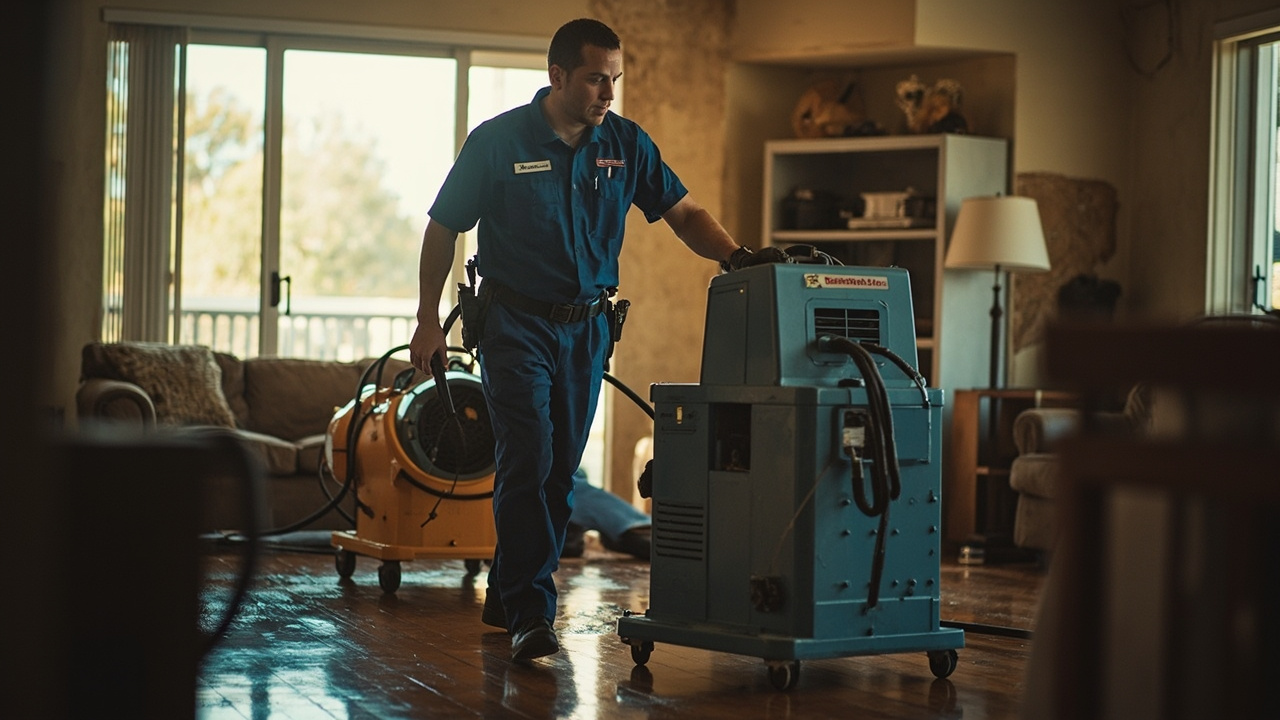
Orlando sits atop the Floridan Aquifer, a porous limestone formation that holds groundwater just 10-30 feet below the surface in most neighborhoods. When water enters a structure through plumbing failures or storm events, the high ambient humidity prevents natural evaporation. The limestone substrate beneath concrete slabs absorbs water and creates a continuous moisture source through capillary action. Standard structural drying techniques that work in arid climates fail here because the vapor pressure differential between saturated materials and ambient air is minimal. Professional structural drying services must use low-grain refrigerant dehumidifiers that artificially lower the dew point and create the vapor pressure gradient needed to pull moisture from building materials. Without this equipment, you are simply moving humid air around without removing moisture.
Orlando's building codes require specific moisture management strategies for new construction, but older properties were built before these standards existed. Neighborhoods like College Park, Thornton Park, and Audubon Park contain structures built in the 1920s-1950s with minimal moisture barriers. These properties need structural dehumidification services that account for building envelope deficiencies. Reliance Water Damage Restoration Orlando understands how different eras of construction respond to water intrusion. We adjust drying protocols based on whether your property has a vapor barrier, what type of insulation is present, and whether the foundation is slab-on-grade or raised. This local knowledge prevents over-drying that can crack historic plaster or under-drying that leaves hidden moisture pockets.