Why a Tiny Leak in Your Refrigerator Ice Maker Line Can Cause Massive Damage
Water pooling under your fridge might seem like a minor inconvenience. But in Orlando’s humid climate, even a slow drip from your ice maker line can turn into a structural nightmare within days. The moisture seeps into your subfloor, spreads through cabinets, and creates the perfect breeding ground for mold before you even notice the problem. Hardwood Floor Water Damage Restoration in Winter Garden.
Most Orlando homeowners discover the damage only after their floor starts buckling or they smell that unmistakable musty odor. By then, the repair costs have multiplied. A simple $50 supply line replacement can escalate into thousands of dollars of structural restoration work. EPA mold guidelines.
The real danger lies in how these leaks hide. Behind your refrigerator, under cabinets, and within wall cavities, moisture spreads silently. Orlando’s high humidity accelerates the process, causing wood to rot, drywall to deteriorate, and mold to colonize within 24-48 hours of continuous exposure.
Understanding what causes these leaks and recognizing the early warning signs can save you from a major restoration project. More importantly, knowing when to call professionals versus attempting a DIY fix determines whether you’re looking at a quick repair or a full kitchen reconstruction. Professional Mold Removal and Remediation Services in Lake Nona.
Common Causes of Refrigerator Ice Maker Supply Line Failures
Ice maker supply lines fail for several predictable reasons. The most common culprit is the plastic tubing itself. Over time, Orlando’s hard water minerals build up inside the line, creating pressure points that eventually crack. The constant expansion and contraction from your refrigerator’s cooling cycles also stress these connections. Emergency Water Damage Restoration for Windermere Homeowners.
Compression fittings represent another frequent failure point. These small brass nuts connect your supply line to both the refrigerator and your home’s water supply. In Florida’s humid environment, these fittings can corrode or loosen over months of vibration from the running appliance.
Pinched or kinked lines cause pressure buildup that leads to sudden ruptures. Many Orlando homes have tight kitchen spaces where the refrigerator sits against the wall. When you push it back too far, you can crimp the supply line without realizing it. The pressure then finds the weakest point and bursts.
Water hammer effects from your home’s plumbing system also contribute to supply line failures. When valves close suddenly, the shockwave travels through your pipes and stresses connections. Orlando’s older neighborhoods like College Park and Audubon Park often have aging plumbing infrastructure that amplifies these effects.
Temperature fluctuations in your garage or utility area where the water line runs can cause tubing to become brittle. Our intense summer heat followed by air conditioning creates expansion and contraction cycles that weaken plastic over time.
Early Warning Signs You Have a Hidden Ice Maker Leak
Water damage from ice maker leaks often announces itself through subtle signs before you see actual standing water. Warped or discolored flooring near your refrigerator serves as one of the first indicators. The moisture causes wood to swell and laminate to bubble up, creating visible irregularities in your kitchen floor.
A musty odor near your refrigerator suggests mold growth has already begun. Orlando’s humidity means mold can establish itself within 24 hours of consistent moisture exposure. If you notice a damp, earthy smell when you open your fridge or stand near it, you likely have hidden moisture problems.
Cabinets adjacent to your refrigerator may show signs of water damage through peeling paint, swollen wood, or soft spots when pressed. The water travels along the path of least resistance, often affecting nearby cabinetry before you notice floor damage.
Increased humidity in your kitchen area can indicate a slow leak. If your kitchen feels consistently damp or you notice condensation on windows near the refrigerator, you might have a supply line issue. Orlando’s already high humidity makes this symptom harder to detect, but persistent moisture problems stand out.
Your refrigerator may start cycling more frequently as it works harder to maintain temperature in a humid environment. The excess moisture forces the cooling system to run longer cycles, increasing your energy bills and putting additional strain on the appliance.
Visible mineral deposits or green corrosion around the water line connection point indicate slow leaks that have been occurring for some time. These deposits form as Orlando’s hard water evaporates, leaving behind calcium and other minerals.
Why Orlando’s Climate Makes Ice Maker Leaks More Dangerous
Orlando’s subtropical climate creates conditions that accelerate water damage from refrigerator leaks. Our average relative humidity of 74% means moisture in the air constantly seeks equilibrium with drier materials. When your ice maker line leaks, that moisture has nowhere to go in our already saturated environment.
Summer afternoon thunderstorms push humidity levels even higher, sometimes reaching 90% or more. During these periods, any moisture from a leak spreads faster through your home’s materials. Wood absorbs moisture like a sponge, and our sandy soil can’t always drain quickly enough to prevent water from backing up into your home.
The heat index in Orlando often exceeds 100 degrees Fahrenheit during summer months. This extreme heat causes materials to expand, creating gaps in flooring and cabinetry where moisture can penetrate deeper. When evening brings cooler temperatures, these materials contract, potentially cracking and allowing more moisture infiltration.
Orlando’s hurricane season from June through November brings additional risks. Power outages during storms mean refrigerators sit unused for hours or days. When power returns, the sudden cooling can cause condensation that combines with any existing moisture from leaks, accelerating mold growth.
Our frequent lightning storms can cause power surges that affect your refrigerator’s water valve. A surge might cause the valve to stick open, creating a continuous flow of water that can flood your kitchen before you return home from work or evacuation.
Many Orlando homes sit on concrete slabs, which means water from a leak travels laterally across the slab rather than draining downward. This horizontal spread can affect larger areas of your flooring and create more extensive damage than in homes with basements or crawl spaces.
Professional Water Damage Assessment Process
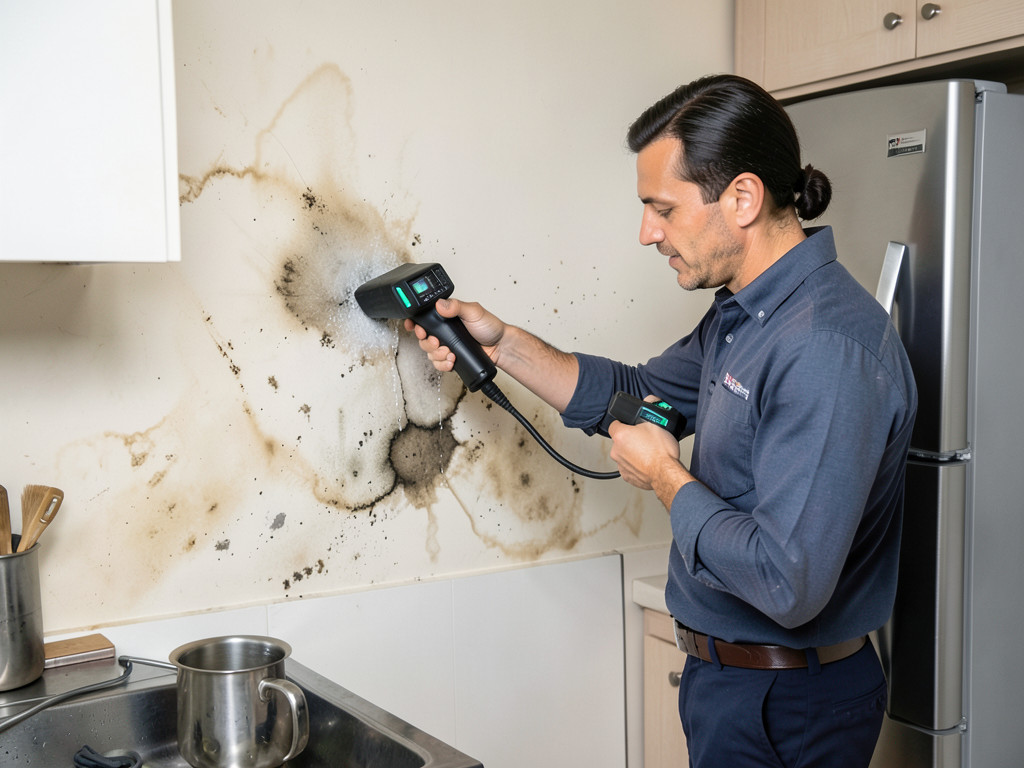
When you call for professional help with a suspected ice maker leak, the assessment process begins with moisture mapping. Technicians use specialized meters to detect water within walls, under flooring, and inside cabinets without causing damage. This non-invasive scanning reveals the true extent of moisture spread that you cannot see.
Thermal imaging cameras identify temperature variations caused by moisture presence. Wet materials conduct heat differently than dry ones, creating visible patterns on infrared scans. This technology allows professionals to pinpoint problem areas behind walls or under flooring where traditional inspection methods fail.
Moisture content readings determine whether materials can be salvaged or must be removed. Wood typically needs moisture content below 16% to prevent mold growth. In Orlando’s climate, achieving this level often requires professional drying equipment and monitoring.
Air quality testing may be necessary if the leak has been active for more than 48-72 hours. Mold spores become airborne quickly in our humid environment. Testing identifies whether remediation is needed beyond simple drying and repair.
Structural assessment evaluates whether the leak has compromised your home’s integrity. Subfloor rot, cabinet delamination, and wall deterioration require different approaches than surface-level moisture damage. Professionals determine which materials can be dried in place versus those requiring removal.
Insurance documentation preparation begins during the assessment. Detailed photos, moisture readings, and damage estimates help streamline the claims process. Many Orlando homeowners find that proper documentation significantly impacts claim approval and payout amounts.
Water Extraction and Drying Techniques for Kitchen Areas
Professional water extraction uses commercial-grade equipment that removes moisture far more effectively than household fans or dehumidifiers. Truck-mounted extraction units pull thousands of gallons of water per hour from affected materials, dramatically reducing drying time and preventing secondary damage.
High-velocity air movers create airflow patterns that force moisture out of materials and into the air. These industrial fans move air at speeds up to 3,000 cubic feet per minute, evaporating water from deep within wood and other porous materials that household fans cannot reach.
Industrial dehumidifiers remove moisture from the air at rates of 20-30 gallons per day. In Orlando’s humid climate, this capacity proves essential for preventing moisture from redepositing into drying materials. Without professional-grade dehumidification, materials may appear dry on the surface while remaining saturated underneath.
Desiccant dehumidifiers use silica gel to absorb moisture from the air, making them particularly effective in Orlando’s high-humidity conditions. These units can reduce relative humidity to levels that prevent mold growth even in our challenging climate.
Floor drying systems use mats connected to vacuum equipment to extract moisture from hardwood and tile floors. These systems can save flooring that would otherwise require replacement, potentially saving thousands of dollars in restoration costs.
Wall cavity drying equipment forces air into wall spaces through small access holes, drying materials without requiring demolition. This approach preserves your kitchen’s structure while ensuring complete moisture removal from hidden areas.
Mold Prevention and Remediation in Orlando Homes
Mold prevention starts with controlling moisture levels within 24-48 hours of water exposure. In Orlando’s climate, this timeline becomes even more critical due to our naturally high humidity providing ideal conditions for mold colonization. Professional drying must achieve specific moisture content levels to prevent fungal growth. What to Do When Your Ceiling Starts Leaking in Baldwin Park.
Antimicrobial treatments applied during the drying process inhibit mold spore germination. These EPA-registered products create barriers that prevent mold from establishing itself in treated areas. The application must occur before drying completes to ensure maximum effectiveness.
Air scrubbing equipment removes airborne mold spores and other contaminants during remediation. HEPA filtration systems capture particles as small as 0.3 microns, significantly improving indoor air quality during and after the restoration process.
Negative air pressure containment prevents mold spores from spreading to unaffected areas during remediation. This technique uses specialized fans and plastic sheeting to create pressure differentials that direct airflow from clean to contaminated areas, not the reverse.
Material removal decisions depend on the extent of contamination and material porosity. Porous materials like drywall, insulation, and carpet padding often require removal if mold has established itself. Non-porous surfaces may be cleaned and salvaged with proper treatment.
Post-remediation verification testing ensures mold levels return to normal background levels. This independent testing provides documentation for insurance purposes and confirms the effectiveness of remediation efforts before reconstruction begins.
Insurance Claims Process for Refrigerator Water Damage
Sudden and accidental water damage from appliance failures typically falls under standard homeowners insurance policies. However, the specific cause of the leak and the extent of resulting damage determine coverage eligibility. Insurance companies distinguish between sudden damage and gradual deterioration from neglected maintenance.
Documentation requirements include detailed damage assessments, repair estimates, and proof of the leak’s sudden nature. Professional restoration companies often assist with this documentation, providing the technical evidence insurance adjusters need to process claims efficiently.
Coverage typically includes structural repairs, flooring replacement, and mold remediation if necessary. Personal property damage from the water may also be covered, though limits and exclusions vary by policy. Understanding your specific coverage helps manage expectations during the claims process.
Deductibles apply to most water damage claims, and multiple claims within a short timeframe can affect future premiums. Some Orlando homeowners choose to handle minor repairs out-of-pocket to avoid claims that might impact long-term insurance costs. The Best Way to Handle Sewage Backup Cleanup in College Park.
Time limitations exist for filing claims after discovering damage. Most policies require notification within a specific timeframe, often 30-60 days. Prompt professional assessment helps ensure you meet these deadlines while preserving evidence of the damage extent.
Depreciation considerations affect replacement cost versus actual cash value payouts. Newer materials may receive full replacement cost coverage, while older items might be subject to depreciation deductions that reduce the claim payment amount.
Cost Comparison: DIY Repair vs. Professional Restoration
DIY refrigerator supply line replacement typically costs $20-$50 for parts and requires basic plumbing knowledge. However, this approach only addresses the leak source, not the resulting water damage. Many homeowners underestimate the extent of moisture spread, leading to incomplete repairs and recurring problems.
Professional leak repair and basic drying services range from $500-$2,000 depending on the affected area size. This includes water extraction, initial drying, and assessment of secondary damage. The cost increases if mold remediation becomes necessary due to delayed response.
Full kitchen restoration from extensive water damage can cost $5,000-$15,000 or more. This includes structural repairs, flooring replacement, cabinet work, and mold remediation if required. The final cost depends on the materials affected and the duration of moisture exposure.
Insurance claim processing fees and potential premium increases should factor into cost considerations. While insurance may cover restoration costs, the claims process involves time investment and potential long-term insurance implications that affect total cost calculations.
Prevention costs, including regular supply line inspections and replacement every 5-7 years, typically run $100-$300 annually. This proactive approach often proves more economical than emergency restoration services, especially considering Orlando’s climate accelerates material deterioration.
Emergency service premiums for after-hours or weekend calls can double standard rates. Planning for potential water damage by identifying 24/7 restoration services before emergencies occur helps manage these additional costs when they arise.
Prevention Strategies for Orlando Homeowners
Regular supply line inspection every six months helps identify potential failure points before catastrophic leaks occur. Check for signs of corrosion, mineral buildup, or loose connections around your refrigerator’s water line. Orlando’s hard water accelerates these deterioration processes, making frequent inspection particularly important.
Supply line replacement every five to seven years prevents age-related failures. Even if lines appear intact, plastic degrades over time, especially in our hot, humid climate. Consider upgrading to braided stainless steel lines, which offer superior durability and resistance to Orlando’s environmental conditions.
Water alarm installation near your refrigerator provides early leak detection. These inexpensive devices sound an alert when they contact moisture, giving you time to address leaks before significant damage occurs. Some smart home systems can even send notifications to your phone when alarms trigger.
Proper refrigerator positioning prevents supply line stress. Leave adequate space behind your appliance for air circulation and to prevent kinking when pushing it back into place. Many Orlando kitchens have limited space, making proper positioning essential for preventing accidental damage.
Whole-house water shut-off valve installation allows you to quickly stop water flow during emergencies. Smart water sensors can automatically shut off supply when they detect unusual flow patterns, preventing extensive damage during leaks or when you’re away from home.
Regular HVAC maintenance helps control indoor humidity levels, reducing the moisture available for mold growth if leaks occur. Orlando’s humidity makes this particularly important, as lower indoor humidity levels slow mold colonization even when minor leaks happen.
Local Service Areas and Neighborhood Considerations
Orlando’s diverse neighborhoods present unique challenges for water damage restoration. Historic districts like Thornton Park feature older homes with original plumbing that may be more susceptible to supply line failures. The age and condition of these systems often require specialized assessment approaches.
Newer developments in areas like Lake Nona typically feature modern PEX plumbing systems that resist corrosion better than older materials. However, the rapid construction timelines in these areas sometimes lead to installation shortcuts that create future leak risks.
Waterfront communities along the Butler Chain of Lakes face additional humidity challenges due to their proximity to large water bodies. The constant moisture exposure accelerates material deterioration and requires more aggressive drying approaches during restoration work.
Apartment and condominium complexes in downtown Orlando present unique access challenges for restoration work. Building management approval, elevator reservations, and parking considerations affect response times and project logistics for multi-unit buildings.
Seasonal residents in areas like Dr. Phillips may not discover refrigerator leaks until returning after extended absences. These situations often involve more extensive damage due to prolonged moisture exposure without intervention, requiring comprehensive restoration approaches.
Commercial properties in the tourism corridor near International Drive face different challenges than residential homes. High-traffic areas require faster restoration to minimize business interruption, while insurance requirements for commercial properties often involve more stringent documentation standards. National Association of Home Inspectors.
Emergency Response and Service Availability
Water damage requires immediate response to prevent escalation. Professional restoration services in Orlando typically guarantee arrival within 60 minutes of emergency calls. This rapid response proves critical in our humid climate, where mold can establish itself within 24-48 hours of moisture exposure.
24/7 availability ensures you can address water damage whenever it occurs, including holidays and weekends when many DIY attempts fail. Orlando’s tourist-driven economy means restoration companies must accommodate both residential and commercial emergency needs around the clock.
Initial emergency services include water extraction, moisture assessment, and damage containment. These first steps prevent further spread and establish the foundation for comprehensive restoration planning. The assessment also helps determine whether insurance claims are necessary or if direct payment options work better for your situation.
Equipment mobilization for large-scale damage may require multiple service vehicles and specialized drying equipment. Professional restoration companies maintain inventories of industrial-grade dehumidifiers, air movers, and extraction units to handle simultaneous emergencies across the Orlando area.
Coordination with other trades becomes necessary for comprehensive restoration. Plumbing repairs, electrical safety assessments, and reconstruction work often require collaboration between specialists. Established restoration companies maintain relationships with qualified subcontractors to ensure seamless project completion.
Communication protocols keep you informed throughout the restoration process. Daily progress updates, digital documentation access, and clear timelines help manage expectations during what can be a stressful experience. Understanding each step of the process reduces anxiety about the unknown aspects of water damage restoration.
Frequently Asked Questions
How long does it take for mold to grow after a refrigerator leak?
Mold can begin growing within 24-48 hours of consistent moisture exposure in Orlando’s humid climate. The combination of available moisture and naturally high humidity creates ideal conditions for rapid mold colonization. Professional drying within this timeframe prevents most mold growth, but delays beyond 72 hours often require remediation services.
Can I fix a small refrigerator leak myself?
You can replace a supply line yourself if you have basic plumbing skills, but this only addresses the leak source. The resulting water damage requires professional assessment and drying to prevent mold growth and structural deterioration. Many DIY repairs fail because homeowners cannot detect hidden moisture that continues causing damage after the visible leak stops.
Will my homeowners insurance cover refrigerator water damage?
Most standard policies cover sudden and accidental water damage from appliance failures, including refrigerator leaks. However, coverage depends on the specific cause and extent of damage. Gradual deterioration from neglected maintenance typically falls under maintenance responsibilities rather than insurance coverage. Professional assessment helps determine coverage eligibility and documentation requirements.
How can I tell if water damage is old or new?
Recent water damage typically shows as darker discoloration, soft materials, and visible moisture. Older damage often appears as permanent staining, warped materials, or musty odors indicating mold growth. Professional moisture meters can distinguish between active and historical moisture, helping determine the appropriate restoration approach for your specific situation.
What should I do immediately after discovering a refrigerator leak?
Immediately shut off the water supply to your refrigerator if possible. Remove any standing water with towels or a wet vacuum. Move the refrigerator away from walls to assess the extent of visible damage. Contact professional restoration services within 24 hours to prevent mold growth and structural deterioration, especially important in Orlando’s humid climate.
Take Action Before Minor Damage Becomes a Major Problem
Water from a tiny refrigerator ice maker leak can destroy your Orlando kitchen before you realize there’s a problem. The combination of hidden moisture spread and our humid climate creates perfect conditions for mold growth, structural damage, and costly repairs that multiply by the day.
Don’t wait until you smell that musty odor or see your floor buckling. Professional assessment and immediate drying can save thousands in restoration costs and prevent health risks from mold exposure. Our team arrives within 60 minutes with commercial-grade equipment designed specifically for Orlando’s challenging climate conditions.
Whether you need emergency water extraction, mold remediation, or complete kitchen restoration, we handle everything from the initial leak repair to final reconstruction. We work directly with your insurance company to streamline the claims process and get your home back to normal as quickly as possible.
Call (689) 268-2233 now for 24/7 emergency service. Our experienced technicians understand Orlando’s unique environmental challenges and provide the comprehensive solutions that protect your home and family from the hidden dangers of water damage.
Don’t let a small leak become a big problem. Take action today and protect your Orlando home from the devastating effects of water damage. For more information, visit IICRC certification standards.
{
“@context”: “https://schema.org”,
“@type”: “BlogPosting”,
“headline”: “Why a Tiny Leak in Your Refrigerator Ice Maker Line Can Cause Massive Damage”,
“description”: “A small refrigerator ice maker leak can cause major damage in Orlando’s humid climate. Learn warning signs, prevention tips, and when to call professionals.”,
“wordCount”: 3452,
“datePublished”: “2026-06-19T10:45:00.000Z”,
“dateModified”: “2026-06-19T10:45:00.000Z”,
“inLanguage”: “en-US”,
“mainEntityOfPage”: {
“@type”: “WebPage”,
“@id”: “https://reliancewaterdamagerestorationorlando.com”
},
“publisher”: {
“@type”: “LocalBusiness”,
“name”: “Reliance Water Damage Restoration Orlando”,
“url”: “https://reliancewaterdamagerestorationorlando.com”
},
“author”: {
“@type”: “Organization”,
“name”: “Reliance Water Damage Restoration Orlando”,
“url”: “https://reliancewaterdamagerestorationorlando.com”
},
“image”: {
“@type”: “ImageObject”,
“url”: “https://reliancewaterdamagerestorationorlando.com/wp-content/uploads/2026/03/why-a-tiny-leak-in-your-refrigerator-ice-maker-lin-1.png”
}
}
{
“@context”: “https://schema.org”,
“@type”: “LocalBusiness”,
“name”: “Reliance Water Damage Restoration Orlando”,
“url”: “https://reliancewaterdamagerestorationorlando.com”,
“address”: {
“@type”: “PostalAddress”,
“addressLocality”: “Orlando”
},
“areaServed”: {
“@type”: “City”,
“name”: “Orlando”
}
}
{
“@context”: “https://schema.org”,
“@type”: “FAQPage”,
“mainEntity”: [
{
“@type”: “Question”,
“name”: “How long does it take for mold to grow after a refrigerator leak?”,
“acceptedAnswer”: {
“@type”: “Answer”,
“text”: “Mold can begin growing within 24-48 hours of consistent moisture exposure in Orlando’s humid climate. The combination of available moisture and naturally high humidity creates ideal conditions for rapid mold colonization. Professional drying within this timeframe prevents most mold growth, but delays beyond 72 hours often require remediation services.”
}
},
{
“@type”: “Question”,
“name”: “Can I fix a small refrigerator leak myself?”,
“acceptedAnswer”: {
“@type”: “Answer”,
“text”: “You can replace a supply line yourself if you have basic plumbing skills, but this only addresses the leak source. The resulting water damage requires professional assessment and drying to prevent mold growth and structural deterioration. Many DIY repairs fail because homeowners cannot detect hidden moisture that continues causing damage after the visible leak stops.”
}
},
{
“@type”: “Question”,
“name”: “Will my homeowners insurance cover refrigerator water damage?”,
“acceptedAnswer”: {
“@type”: “Answer”,
“text”: “Most standard policies cover sudden and accidental water damage from appliance failures, including refrigerator leaks. However, coverage depends on the specific cause and extent of damage. Gradual deterioration from neglected maintenance typically falls under maintenance responsibilities rather than insurance coverage. Professional assessment helps determine coverage eligibility and documentation requirements.”
}
},
{
“@type”: “Question”,
“name”: “How can I tell if water damage is old or new?”,
“acceptedAnswer”: {
“@type”: “Answer”,
“text”: “Recent water damage typically shows as darker discoloration, soft materials, and visible moisture. Older damage often appears as permanent staining, warped materials, or musty odors indicating mold growth. Professional moisture meters can distinguish between active and historical moisture, helping determine the appropriate restoration approach for your specific situation.”
}
},
{
“@type”: “Question”,
“name”: “What should I do immediately after discovering a refrigerator leak?”,
“acceptedAnswer”: {
“@type”: “Answer”,
“text”: “Immediately shut off the water supply to your refrigerator if possible. Remove any standing water with towels or a wet vacuum. Move the refrigerator away from walls to assess the extent of visible damage. Contact professional restoration services within 24 hours to prevent mold growth and structural deterioration, especially important in Orlando’s humid climate.”
}
}
]
}
{
“@context”: “https://schema.org”,
“@type”: “BreadcrumbList”,
“itemListElement”: [
{
“@type”: “ListItem”,
“position”: 1,
“name”: “Home”,
“item”: “https://reliancewaterdamagerestorationorlando.com”
},
{
“@type”: “ListItem”,
“position”: 2,
“name”: “Blog”,
“item”: “https://reliancewaterdamagerestorationorlando.com/blog”
},
{
“@type”: “ListItem”,
“position”: 3,
“name”: “Why a Tiny Leak in Your Refrigerator Ice Maker Line Can Cause Massive Damage”
}
]
}
{
“@context”: “https://schema.org”,
“@type”: “Service”,
“serviceType”: “Water Damage Restoration”,
“provider”: {
“@type”: “LocalBusiness”,
“name”: “Reliance Water Damage Restoration Orlando”,
“url”: “https://reliancewaterdamagerestorationorlando.com”
},
“areaServed”: {
“@type”: “City”,
“name”: “Orlando”
},
“description”: “A small refrigerator ice maker leak can cause major damage in Orlando’s humid climate. Learn warning signs, prevention tips, and when to call professionals.”
}