Deciding Between Replacing or Repairing Water-Damaged Drywall in Your Orlando Home
When water invades your walls in Orlando the clock starts ticking. Florida’s high humidity creates the perfect breeding ground for mold and bacteria within 24-48 hours of moisture exposure. Before you grab a utility knife or call a contractor you need to know whether that wet drywall can be saved or if it poses a health risk to your family. What to Do When Your Ceiling Starts Leaking in Baldwin Park.
Central Florida homeowners face unique challenges when dealing with water damage. From hurricane season storms to plumbing failures the decision between repair and replacement affects not just your wallet but the long-term structural integrity of your home. Understanding the critical factors will help you make the right call before small problems become major headaches. EPA Mold Resources.
Understanding Water Categories and Their Impact
Not all water damage is created equal. The Institute of Inspection Cleaning and Restoration Certification (IICRC) classifies water into three categories that determine your restoration options. IICRC (Institute of Inspection Cleaning and Restoration Certification).
Category 1: Clean Water comes from broken supply lines rainwater or appliance malfunctions. This water poses minimal health risks initially but can degrade quickly in Orlando’s heat.
Category 2: Gray Water contains significant contamination from dishwashers washing machines or toilet overflows without feces. This water harbors microorganisms that multiply rapidly in humid conditions.
Category 3: Black Water includes sewage floodwaters and standing water that supports microbial growth. This water contains pathogenic agents and requires immediate professional removal.
Once water hits Category 2 or 3 status the drywall must be replaced. No amount of cleaning can make contaminated gypsum board safe again especially in Orlando’s climate where residual moisture feeds mold colonies. Emergency Water Damage Restoration for Windermere Homeowners.
The 24-Hour Rule: Assessing the Damage Severity
Time matters more than you think. In Orlando’s 74% average humidity mold spores begin colonizing damp drywall within 24-48 hours. Here’s how to assess whether your walls can be saved.
Start with the thumb test. Press firmly on the drywall surface. If it feels solid and springs back the gypsum core may still be intact. If it feels soft spongy or crumbles you’re dealing with structural failure.
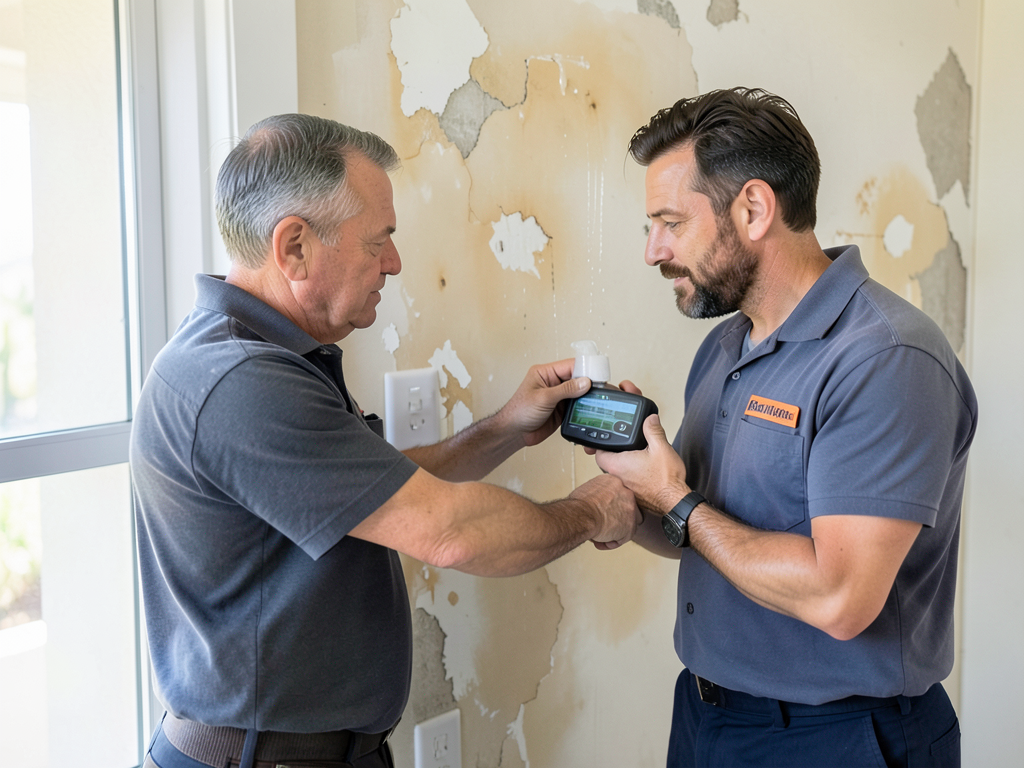
Check for visible staining. Small surface marks smaller than a dinner plate might be cosmetic. Large dark spots or multiple stains indicate deeper saturation requiring replacement.
Look for paint bubbling or peeling. This signals moisture trapped behind the surface. Minor bubbling might be repairable but extensive paint failure suggests the drywall has lost its structural integrity.
Pay attention to odor. A musty smell indicates active microbial growth. In Orlando’s climate this odor means mold colonies are already established and spreading.
When You Can Repair: Minor Leaks and Cosmetic Issues
Repair becomes an option when you meet specific criteria. Small Category 1 water damage affecting less than 10% of a wall surface might be salvageable if addressed quickly. Water Bug & Pest Infestations.
Ideal repair conditions include clean water exposure under 24 hours minimal staining and no structural sagging. The drywall must still feel solid when pressed and show no signs of mold growth.
Common repairable scenarios include small roof leaks that caused minimal staining before discovery minor AC condensation from properly functioning units and isolated plumbing drips caught early.
The repair process involves cutting out the damaged section typically a rectangle extending 6-12 inches beyond visible damage. New drywall gets installed with proper joint compound and texture matching becomes critical especially in Orlando’s Mediterranean Revival and Spanish Colonial homes.
Professional drying equipment accelerates the process. Industrial dehumidifiers remove moisture from surrounding materials preventing secondary damage. This step proves crucial in Orlando where natural drying rarely achieves safe moisture levels. Professional Mold Removal and Remediation Services in Lake Nona.
When Replacement is Mandatory: The Danger Zone
Certain conditions make replacement non-negotiable. Any Category 2 or 3 water exposure requires complete drywall removal regardless of apparent damage.. Read more about A Guide to HOA Responsibility for Water Damage in Your MetroWest Condo.
Structural sagging signals the gypsum core has broken down. When drywall loses its rigidity it cannot support paint texture or provide proper insulation. This damage extends beyond visible areas as water travels through wall cavities.. Read more about The Dangers of Combining Water Damage and Old Electrical Wiring in Parramore Properties.
Mold colonies visible as black green or white fuzzy growth demand immediate replacement. In Orlando’s climate even small mold patches indicate extensive hidden growth within wall cavities. The visible portion represents only 10% of the actual problem.
Water exposure lasting more than 48 hours in Orlando’s humidity creates irreversible damage. The gypsum absorbs moisture like a sponge and never fully dries without professional equipment. This trapped moisture feeds mold growth for months or years.
Insulation saturation compounds the problem. Once insulation gets wet it loses its R-value and becomes a mold breeding ground. In Central Florida’s concrete block construction water often travels between the block and drywall creating hidden damage zones.. Read more about Identifying the Difference Between a Termite Problem and Water Damage in College Park.
The Orlando Factor: Why Humidity Changes the Math
Orlando’s subtropical climate fundamentally alters water damage restoration. Our 74% average humidity means materials never achieve natural equilibrium moisture content without intervention.
During summer months Orlando experiences dew points above 70°F. This creates conditions where surfaces sweat even without direct water exposure. Wet drywall in this environment stays damp indefinitely promoting continuous microbial growth.
Afternoon thunderstorms dump 2-3 inches of rain in hours. Homes in neighborhoods like Winter Park and Maitland with mature tree canopies often hide roof leaks for weeks. By the time staining appears the damage extends far beyond visible areas.
Central Florida’s building practices affect restoration decisions. Many Orlando homes feature concrete block construction with furring strips and gypsum board. Water trapped in the block cavity creates pressure that forces moisture through the drywall from behind.
Professional restoration requires industrial dehumidifiers and air movers. Household fans cannot achieve the 30-40% relative humidity needed for proper drying. This equipment runs 24/7 for 3-5 days depending on damage extent.
Cost Analysis: DIY Patching vs. Professional Restoration
Understanding the true cost difference helps you make informed decisions. While DIY repairs might save $200-300 upfront they often cost thousands in hidden damage.
| Factor | DIY Repair | Professional Restoration |
|---|---|---|
| Initial Cost | $100-300 | $1,500-4,000 |
| Equipment Access | Household fans | Industrial LGR dehumidifiers |
| Moisture Detection | Visual inspection | Thermal imaging moisture meters |
| Insurance Documentation | None | Detailed reports photos |
| Long-term Risk | High mold risk | Professional guarantee |
DIY repairs often miss hidden damage. Water travels horizontally through drywall at 1 inch per hour. A leak appearing in one spot might affect 10-15 square feet of material.
Professional restoration includes moisture mapping using infrared cameras. This technology reveals water migration patterns invisible to the naked eye. In Orlando homes this step prevents costly future repairs.
Insurance companies prefer professional documentation. DIY repairs without proper moisture testing can void coverage for subsequent damage. Many Orlando policies require professional assessment for claims over $2,500.
The 2-Foot Rule: Professional Industry Standards
Restoration professionals follow the 2-foot rule for flood cuts. When removing damaged drywall they cut at least 24 inches above the highest visible water line.
This standard accounts for water wicking through capillary action. Drywall can draw water up to 2 feet above the actual flood level. In Orlando’s humidity this wicking continues for days after visible water recedes.
The rule also addresses contamination spread. Water carries bacteria and mold spores far beyond visible damage. Cutting at the 2-foot mark ensures removal of all potentially contaminated material.
Professionals use moisture meters to verify dryness before reconstruction. Readings must show less than 16% moisture content in wood materials and less than 12% in gypsum board. Orlando’s humidity means achieving these levels requires active dehumidification.
Matching Orlando’s Drywall Textures
Orlando homes feature distinctive drywall textures that affect repair decisions. The most common include Orange Peel a light splatter texture and Knockdown a flattened version of orange peel.
Mediterranean Revival homes in College Park often feature Skip Trowel a hand-textured finish that proves difficult to match. Modern homes in Kissimmee developments typically use smooth walls with minimal texture.
Texture matching requires skill and specialized tools. DIY repairs often create visible patches even with perfect color matching. Professional contractors use hopper guns and specific nozzle sizes to replicate existing textures.
Paint sheen affects repair visibility. Orlando’s bright sunlight makes texture differences more apparent on glossy finishes. Most professionals recommend repainting entire walls rather than spot touch-ups.
Insurance Considerations for Orlando Homeowners
Florida insurance policies handle water damage differently than other states. Most Orlando policies cover sudden accidental damage but exclude long-term leaks and groundwater flooding. The Best Way to Handle Sewage Backup Cleanup in College Park.
Document everything immediately. Take photos before cleanup begins. Orlando insurance adjusters need evidence of damage extent and source. Date-stamped photos prove invaluable during claims.
Professional restoration companies provide detailed damage assessments. These reports include moisture readings thermal imaging and contamination classifications. Insurance companies often require this documentation for claims over $5,000.
Many Orlando policies include additional living expenses coverage. If water damage makes your home uninhabitable insurance might cover temporary housing costs. This coverage typically lasts 12-24 months depending on your policy.
Understand your deductible. Orlando homeowners often choose $1,000-$2,500 deductibles to keep premiums manageable. Calculate whether repair costs justify filing a claim against your deductible.
Preventing Future Water Damage
Prevention costs less than restoration. Orlando’s climate creates specific vulnerabilities that require targeted prevention strategies.
Inspect your roof annually especially before hurricane season. Orlando’s afternoon thunderstorms create wind-driven rain that exploits even small roof defects. Check flashing around chimneys and vents where leaks commonly develop.
Maintain your AC system. Orlando’s extended cooling season means AC units run 8-10 months annually. Clogged condensate drains cause more water damage than most homeowners realize. Schedule bi-annual maintenance to clean drain lines and check for leaks.
Install water sensors near water heaters washing machines and under sinks. Orlando’s hard water accelerates pipe corrosion. Early leak detection prevents major damage. Smart sensors send alerts to your phone when moisture is detected.
Consider whole-house water shutoff valves. These devices detect unusual water flow and automatically shut off supply. Many Orlando homeowners install these systems for peace of mind especially when traveling during hurricane season.
Making Your Final Decision
Deciding between repair and replacement comes down to three factors: water category exposure time and structural integrity. When in doubt err on the side of replacement especially in Orlando’s humidity.
Ask yourself these questions: Was the water clean? How long was it wet? Does the drywall feel solid? Is there any odor or visible mold? If you answer no to any of these questions replacement becomes the safer choice.
Consider your home’s value and your family’s health. Orlando homes represent significant investments and mold exposure poses serious health risks. Professional assessment costs $200-400 but provides peace of mind and prevents costly mistakes.
Remember that hidden damage costs more than visible damage. Water travels through walls finding paths you cannot see. Professional moisture testing reveals the true extent of damage ensuring complete restoration.
Frequently Asked Questions
How long can wet drywall sit before mold grows?
In Orlando’s 74% humidity mold begins growing within 24-48 hours of water exposure. The warm temperatures accelerate microbial growth making quick action essential. Even Category 1 clean water becomes contaminated if left wet for more than 48 hours.
Can I paint over water-damaged drywall?
No. Painting over water damage traps moisture and promotes mold growth. The stain will bleed through paint within weeks. You must address the moisture source repair or replace damaged material and ensure complete dryness before painting.
How much does professional drywall replacement cost in Orlando?
Professional replacement typically costs $1,500-4,000 depending on damage extent and home characteristics. This includes removal disposal moisture testing antimicrobial treatment and finishing. Insurance often covers sudden accidental damage.
What’s the difference between greenboard and regular drywall?
Greenboard has a moisture-resistant paper facing but is not waterproof. It works in bathrooms and laundry rooms but fails when submerged or exposed to Category 2-3 water. Once contaminated it requires replacement like regular drywall.
How do I know if my insurance will cover the damage?
Coverage depends on your policy and damage cause. Sudden accidental damage like burst pipes is typically covered. Long-term leaks groundwater flooding and neglect are usually excluded. Professional assessment helps determine coverage eligibility.
Take Action Before It’s Too Late
Water damage waits for no one especially in Orlando’s humid climate. Every hour of delay increases mold risk and repair costs. If you’re seeing water stains feeling soft drywall or smelling musty odors don’t wait.
Professional assessment provides clarity and peace of mind. Our Orlando-based restoration specialists understand local building practices humidity challenges and insurance requirements. We’ll help you make the right decision between repair and replacement.
Call us today at (689) 268-2233 for 24/7 emergency response. We’ll arrive within 2 hours to assess your damage provide a clear action plan and begin restoration immediately. Your home’s health and your family’s safety depend on quick professional action.
Don’t let water damage become a health hazard. Contact us now and let our Orlando experts protect your home and your investment.
{
“@context”: “https://schema.org”,
“@type”: “BlogPosting”,
“headline”: “Deciding Between Replacing or Repairing Water-Damaged Drywall in Your Orlando Home”,
“description”: “Learn when to repair or replace water-damaged drywall in Orlando’s humid climate. Get expert advice on mold risks, structural integrity, and cost factors from local restoration specialists.”,
“wordCount”: 2165,
“datePublished”: “2026-05-03T12:38:00.000Z”,
“dateModified”: “2026-05-03T12:38:00.000Z”,
“inLanguage”: “en-US”,
“mainEntityOfPage”: {
“@type”: “WebPage”,
“@id”: “https://reliancewaterdamagerestorationorlando.com”
},
“publisher”: {
“@type”: “LocalBusiness”,
“name”: “Reliance Water Damage Restoration Orlando”,
“url”: “https://reliancewaterdamagerestorationorlando.com”
},
“author”: {
“@type”: “Organization”,
“name”: “Reliance Water Damage Restoration Orlando”,
“url”: “https://reliancewaterdamagerestorationorlando.com”
},
“image”: {
“@type”: “ImageObject”,
“url”: “https://reliancewaterdamagerestorationorlando.com/wp-content/uploads/2026/03/deciding-between-replacing-or-repairing-water-dama-1.png”
}
}
{
“@context”: “https://schema.org”,
“@type”: “LocalBusiness”,
“name”: “Reliance Water Damage Restoration Orlando”,
“url”: “https://reliancewaterdamagerestorationorlando.com”,
“address”: {
“@type”: “PostalAddress”,
“addressLocality”: “Orlando”
},
“areaServed”: {
“@type”: “City”,
“name”: “Orlando”
}
}
{
“@context”: “https://schema.org”,
“@type”: “FAQPage”,
“mainEntity”: [
{
“@type”: “Question”,
“name”: “How long can wet drywall sit before mold grows?”,
“acceptedAnswer”: {
“@type”: “Answer”,
“text”: “In Orlando’s 74% humidity mold begins growing within 24-48 hours of water exposure. The warm temperatures accelerate microbial growth making quick action essential. Even Category 1 clean water becomes contaminated if left wet for more than 48 hours.”
}
},
{
“@type”: “Question”,
“name”: “Can I paint over water-damaged drywall?”,
“acceptedAnswer”: {
“@type”: “Answer”,
“text”: “No. Painting over water damage traps moisture and promotes mold growth. The stain will bleed through paint within weeks. You must address the moisture source repair or replace damaged material and ensure complete dryness before painting.”
}
},
{
“@type”: “Question”,
“name”: “How much does professional drywall replacement cost in Orlando?”,
“acceptedAnswer”: {
“@type”: “Answer”,
“text”: “Professional replacement typically costs $1,500-4,000 depending on damage extent and home characteristics. This includes removal disposal moisture testing antimicrobial treatment and finishing. Insurance often covers sudden accidental damage.”
}
},
{
“@type”: “Question”,
“name”: “What’s the difference between greenboard and regular drywall?”,
“acceptedAnswer”: {
“@type”: “Answer”,
“text”: “Greenboard has a moisture-resistant paper facing but is not waterproof. It works in bathrooms and laundry rooms but fails when submerged or exposed to Category 2-3 water. Once contaminated it requires replacement like regular drywall.”
}
},
{
“@type”: “Question”,
“name”: “How do I know if my insurance will cover the damage?”,
“acceptedAnswer”: {
“@type”: “Answer”,
“text”: “Coverage depends on your policy and damage cause. Sudden accidental damage like burst pipes is typically covered. Long-term leaks groundwater flooding and neglect are usually excluded. Professional assessment helps determine coverage eligibility.”
}
}
]
}
{
“@context”: “https://schema.org”,
“@type”: “BreadcrumbList”,
“itemListElement”: [
{
“@type”: “ListItem”,
“position”: 1,
“name”: “Home”,
“item”: “https://reliancewaterdamagerestorationorlando.com”
},
{
“@type”: “ListItem”,
“position”: 2,
“name”: “Blog”,
“item”: “https://reliancewaterdamagerestorationorlando.com/blog”
},
{
“@type”: “ListItem”,
“position”: 3,
“name”: “Deciding Between Replacing or Repairing Water-Damaged Drywall in Your Orlando Home”
}
]
}
{
“@context”: “https://schema.org”,
“@type”: “Service”,
“serviceType”: “Water Damage Restoration”,
“provider”: {
“@type”: “LocalBusiness”,
“name”: “Reliance Water Damage Restoration Orlando”,
“url”: “https://reliancewaterdamagerestorationorlando.com”
},
“areaServed”: {
“@type”: “City”,
“name”: “Orlando”
},
“description”: “Learn when to repair or replace water-damaged drywall in Orlando’s humid climate. Get expert advice on mold risks, structural integrity, and cost factors from local restoration specialists.”
}